- Home
- Health & Wellness
- Wellness Center
- Facility
- Facility History
- About the Facility
- Mission
- Tour the Facility
- History
- Green Initiative
- Quiet Lounge
- Floor Plan
- Rentals and Retreats
- Directions
- Policies
- Pool
- About Fitness
- Group Exercise
- Specialty Exercise
- 5 Day Fitness Challenge
- Personal Training
- Row-Vember
- Upcoming Certifications
- Virtual TrainerSteroid Use Awareness
Facility History
The Wellness program at the University of North Dakota unofficially began in 2000, when University President Charles Kupchella launched the Healthy UND Coalition and charged Vice President of Student and Outreach Services Robert H. Boyd with its organizational oversight. This group of students, faculty, and staff endorsed a multi-dimensional concept of wellness, recommended that a Director of Wellness be hired, and endorsed a concept paper describing a UND Wellness Center. A second concept paper articulating a vision of a Wellness Center was written by leaders of student government. The Wellness program officially came into being in May of 2002 with the naming of Laurie Betting as Director of Wellness.
In April 2002, students approved a fee increase of $50/semester to fund a projected $8 million renovation of Hyslop Sports Center and to operate a Wellness Center, and four months later an interim Wellness Center opened in Hyslop. Space provided by the Physical Education and Exercise Science Department (PEXS) was converted to house cardio and weight equipment and offer programming for group exercise, fitness assessment, and orientation. During its first year, over 85% of enrolled students accessed that temporary facility at least once.
In November 2002, the architectural firm of Hastings + Chivetta of St. Louis was engaged to provide preliminary concepts regarding site location and building. Following meetings that were held across campus, recommendations were forwarded to President Kupchella that a new structure be built near the English Coulee.
A second student referendum was initiated by Student Government to ascertain students’ willingness to increase fees an additional $45 to construct and operate a Wellness Center that would meet the expectations outlined in the concept papers. Once again, students stepped forward to provide sufficient funding to build and operate a world-class facility. Plans were drawn up for a 106,000 square-foot, $20 million wellness center, and construction began in August 2004 with a planned opening in fall of 2006.
In the meantime, the interim Wellness Center offered students (and paying faculty and staff) multiple opportunities to pursue wellness in all seven dimensions: physical, emotional, spiritual, intellectual, occupational, social, and environmental. The interim facility in Hyslop received over 120,000 visits per year, sometimes up to 1,000 visits in a single day. Over 35 hours of group exercise classes were offered each week. Other services offered included personal training, dietitian services, back care clinics, activity incentive programs, newsletters, and employee health screenings. The recreational sports (intramurals) program was moved to the Wellness Center’s control in 2003, and continued to grow in numbers of both offerings and participants.
While in the interim facility, the center’s physical resources grew from nothing, to borrowed space and surplus furniture and computers, to a selection of new fitness equipment, partnerships with campus and community organizations, and a workforce of dedicated student and professional employees. Strategic planning began to capture the program’s mission, vision, values, initiatives, and action plans that would position the program for its future.
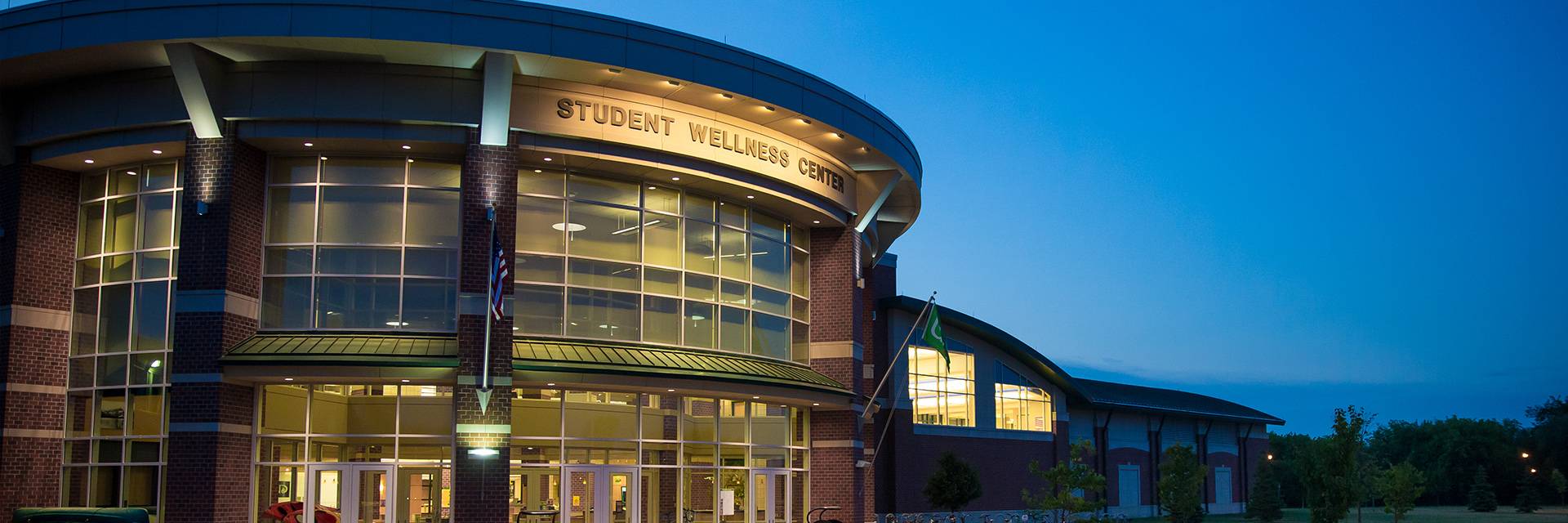
During this time of growing a new Wellness program on campus, even greater effort was focused on planning and building the new Student Wellness Center. Every detail from room configuration, interior detail, and equipment selection was carefully planned and considered. The strategic plan was revisited numerous times and staffing levels, recruitment, and training emerged as critical patterns in the process. Attention turned further to student development, assessment, and defining learning outcomes for both student staff and program participants, in order to both serve the student population and help the University in both its academic mission and its focus on assessment. The administrative staff moved into the new building on August 1, 2006, and intensive staff training began soon thereafter.
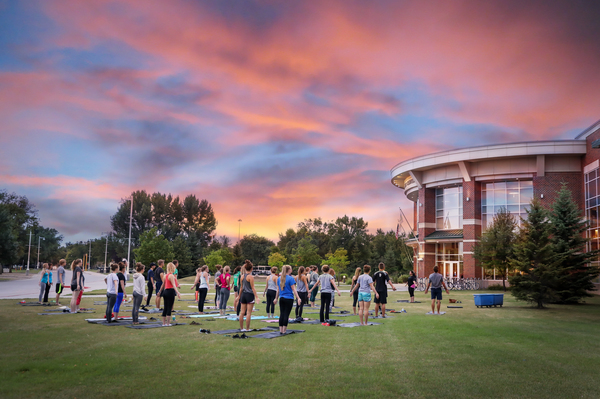
With the opening of the new center on September 25, 2006, visitors are greeted with a building that is state-of-the art in every way, with wellness features that are drawing attention nation-wide, and an outstanding level of guest service. This is not the result of chance or accident, but of many hours of dedicated, focused, hard work by many people on the UND campus, starting with those people who began to articulate a need for a wellness initiative, student leaders who defined a vision and proposed a means to pay for it, administrative leaders who paved the path to help make these visions a reality, to campus partners who have supported the journey, to Wellness Center staff, past and present, who have put in untold hours of creative effort to refine the vision and give it a place to grow. The entire journey has been a labor of love, and, like the journey to wellness itself, it is only at the beginning.