
Music as Medicine
For Aubrey Mizerak, music has always been about more than performing. It's been a way to build relationships, strengthen communities and help people heal.
As a music therapy major at the University of North Dakota, Aubrey has found a career that brings together two lifelong interests: healthcare and music.
Along the way, she's become a leader on campus, helping to rebuild the Music Therapy Club, volunteering with inclusive community music initiatives and discovering firsthand how music can help people reach goals they never thought possible. But that path wasn't always so obvious.
When Aubrey arrived at UND from Ames, Iowa, she planned to pursue a career in healthcare. She initially enrolled as a chemistry major, later switched to forensic science and eventually found her way back to music, something that had been part of her life for as long as she could remember.
Music is such a powerful thing, and seeing the scientific ways that it helps you is super interesting to me.
By the time she discovered music therapy, she realized she didn't have to choose between her interest in healthcare and her passion for music.
"My dad is a physician, so I always thought I wanted to go into healthcare," Aubrey said. "But I've been really involved in music my whole life."
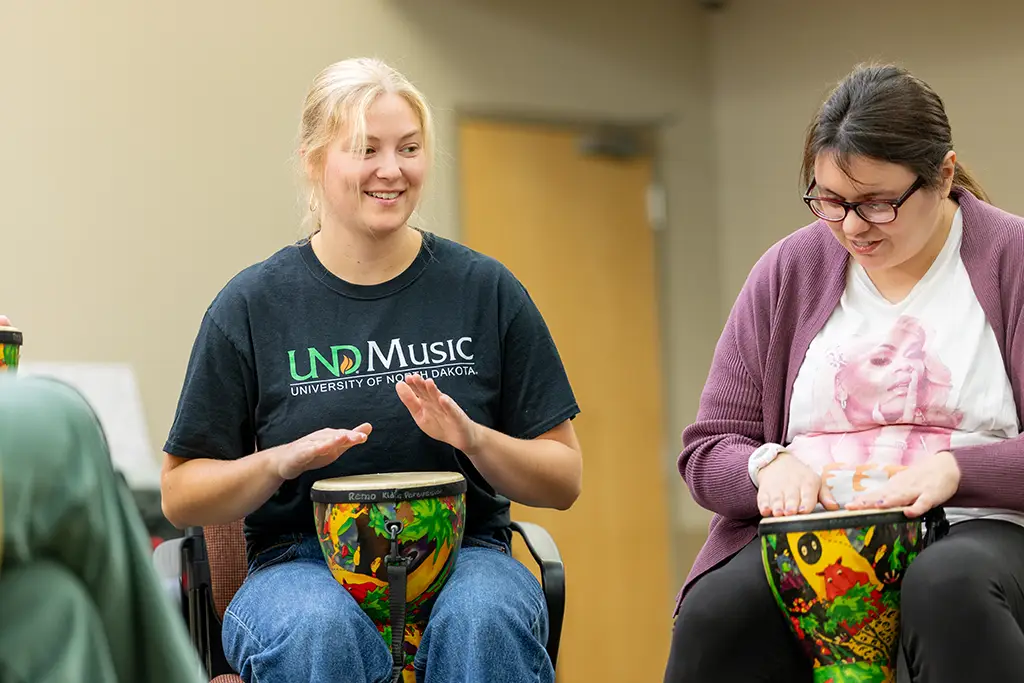
Aubrey is a leader on campus, helping to rebuild the Music Therapy Club, volunteering with inclusive community music initiatives and discovering firsthand how music can help people reach goals.
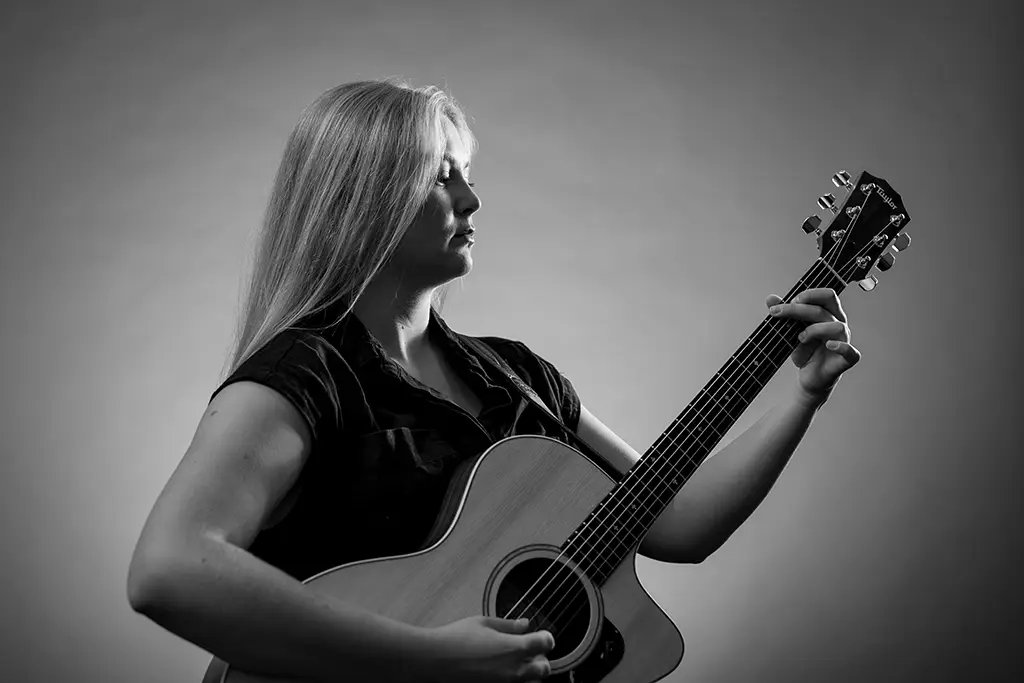
After completing her degree and earning board certification, Aubrey hopes to work in a hospital setting, helping patients heal and achieve meaningful outcomes through music.
As Aubrey explored her options, UND's newly relaunched Music Therapy program offered exactly what she had been looking for: a way to combine her interests in healthcare and music.
"It's a healthcare profession," she said. "Music is such a powerful thing, and seeing the scientific ways that it helps you is super interesting to me."
Today, Aubrey is preparing for a career that uses music as a clinical tool to support physical, cognitive, emotional and social well-being. Through coursework and practicum experiences, she has already begun seeing the impact that work can have on others.
At UND, I've met people that have encouraged me to be more of who I want to be.
Working with older adults and alongside physical therapy students, Aubrey helped clients work toward individualized goals through music-based interventions. The results reinforced that she had found the right profession.
"I'll write the original goals I set for these clients, and then at the end of the semester I see the progress that we're making, and they met these goals because I was able to help with them."
Those experiences at UND transformed music therapy from something she studied in a classroom into something she could see changing lives.
"I've impacted people's lives, and that has been really incredible," Aubrey said. "They know my name, and they look forward to our sessions together."
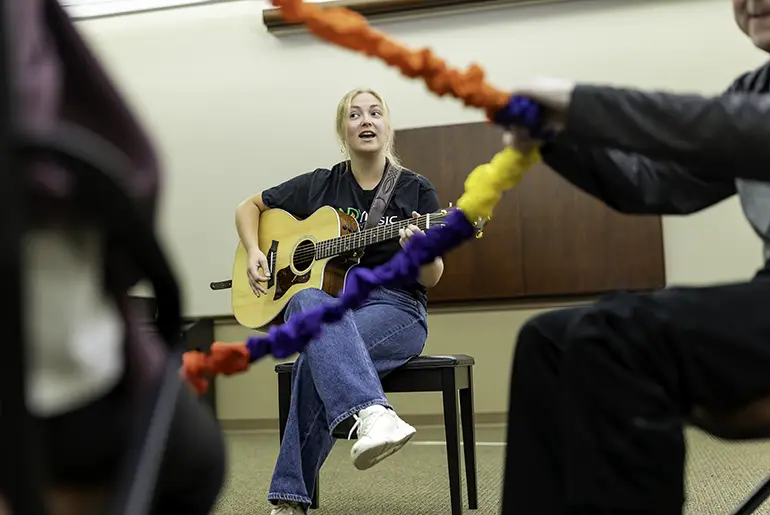
It was UND's opportunities, mentorship and willingness to let students explore new paths that ultimately helped Aubrey find her purpose.
That desire to create meaningful connections extends far beyond her practical experiences.
When UND's Music Therapy Club became inactive, Aubrey helped bring it back. As one of the program's upperclassmen, she worked with fellow students to reestablish the organization and create a place where new music therapy majors could find support and community.
"I really want everybody to enjoy themselves," she said of her leadership philosophy. "I'm trying to make decisions and include people in the decision making."
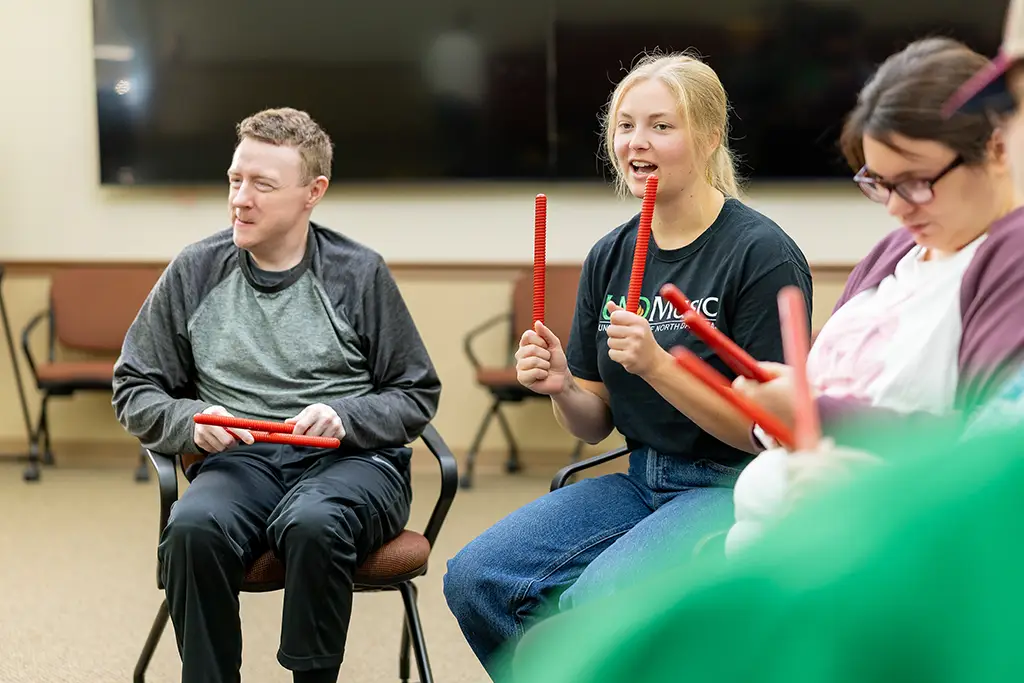
Through Music Therapy, Aubrey takes pride in impacting lives for the better.
Her commitment to inclusion is also reflected in her involvement with UND's Sensory Family Concert and the Bridges Community Choir. Both experiences reinforced her belief that music should be accessible to everyone, regardless of age, background or ability.
For Aubrey, the Bridges Community Choir demonstrates the power music has to bring people together. What begins as weekly rehearsals can grow into friendships, encouragement and a sense of belonging.
"It was building those friendships and that sense of community that I looked forward to," she said. "I've really enjoyed it."
That focus on connection continues to shape her future goals. After completing an internship and earning board certification, Aubrey hopes to work in a hospital setting, helping patients heal and achieve meaningful outcomes through music.
I get to help people meet their goals and get better or heal through music. And I think that's really incredible.
Looking back, Aubrey believes it was UND's opportunities, mentorship and willingness to let students explore new paths that ultimately helped her discover her purpose. "I think I changed a lot more than I thought I would," she said.
"I've met people that have encouraged me to be more of who I want to be."
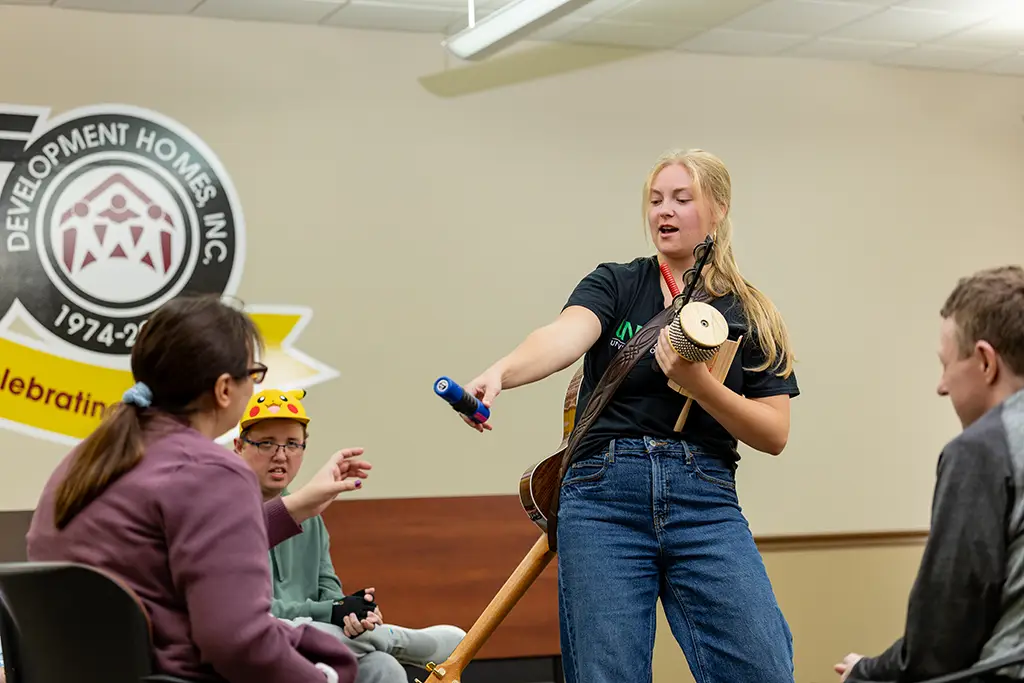
Aubrey believes it was UND's opportunities, mentorship and willingness to let students explore new paths that ultimately helped her discover her purpose.
For Aubrey, that growth has led to a career that combines science, service and creativity. But more importantly, it has given her a way to help others through something nearly everyone can connect with: music.
"I get to do that for my job, to help people meet their goals and get better or heal through music," she said. "And I think that's really incredible."