
Essential Air Traffic Controller Skills You Need to Succeed
At 35,000 feet, planes share open air. There are no visible markers or boundaries, and yet their movements are carefully synchronized to protect lives and maintain safety.
Request Information
That order depends on strong air traffic controller skills. These include clear communication, situational awareness, sound judgment, and focused training to keep the system running safely.
Key Takeaways
- Air traffic controllers rely on strong communication, decision-making, multitasking, teamwork, and stress management skills.
- Proficiency in radar and navigation systems, aviation regulations, and simulation technology is necessary for safe and efficient management of aircraft operations.
- Mastery of air traffic controller skills comes through structured education, realistic simulation practice, and ongoing professional development.
What is an Air Traffic Controller?
Air traffic controllers are aviation professionals who coordinate the movement of aircraft in the sky and on the ground. They work in control towers, approach control facilities, or en route centers where they help to regulate aircraft so that the planes stay a safe distance apart and follow an unobstructed path.
Controllers talk to pilots, updating them on the weather, authorizing take-off and landing, and making crucial decisions during emergencies. They often have to handle multiple planes simultaneously within their airspace.
Core Air Traffic Controller Skills
The responsibilities of air traffic control require the development of several core skills. The following are among the most important ones:
Communication Skills
Clear, concise communication is a matter of life and death. Controllers must deliver instructions to pilots using precise phraseology that leaves no room for misinterpretation. A single unclear word could lead to confusion at a critical moment.

Active listening is equally important. You'll need to process radio communications from multiple aircraft while monitoring weather updates and coordinating with other controllers. This means filtering relevant information from constant radio chatter and responding appropriately to each situation.
Decision-Making and Problem-Solving
Controllers face dozens of decisions every hour—some routine, others that require immediate action.
Strong decision-making skills mean evaluating multiple factors simultaneously, like aircraft performance, weather conditions, pilot capabilities, and airspace restrictions. You'll need to make accurate judgments quickly, at times even with incomplete information, and maintain safety as your top priority.
Problem-solving in air traffic control also means thinking ahead. Experienced controllers anticipate potential conflicts before they develop, positioning aircraft to avoid future complications. This proactive approach prevents emergencies rather than simply reacting to them.
Attention to Detail
When you're monitoring multiple aircraft simultaneously, small details can make a huge difference. Controllers must notice when an aircraft deviates slightly from its assigned altitude, spot conflicts developing miles away, and catch inconsistencies in flight plans that could cause problems later.
This skill extends beyond just watching radar screens. You'll need to review weather reports for potential hazards, verify clearances before issuing them, and make sure every piece of information you provide is accurate. A single-digit error in an altitude assignment or a missed decimal point in a heading could create a dangerous situation.
Training programs like UND's use advanced simulation systems that help students develop this crucial skill in realistic scenarios before they ever step into an actual control tower.
Multitasking and Time Management
Air traffic controllers rarely have the luxury of focusing on only one task at a time, which is why multitasking and time management are so important.
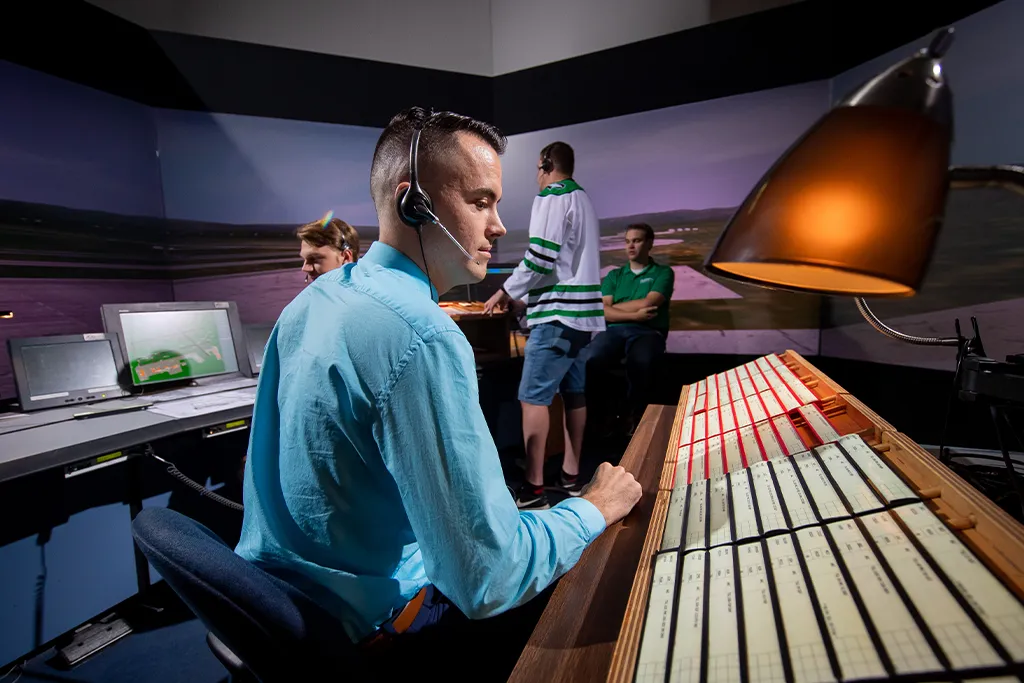
Multitasking means monitoring several aircraft, maintaining communication with pilots, and processing constant data updates, all at once. Time management ensures that controllers maintain consistent spacing between aircraft: close enough to keep traffic efficient, but far enough apart to stay safe.
Stress Management and Emotional Resilience
The stress of air traffic control is constant. When in this position, you're responsible for human lives. It's an environment where mistakes are unacceptable and emergencies can develop without warning. It's a career that demands the ability to keep calm and stay focused when the stakes are highest.
Stress management does not mean you can eliminate all pressure, but rather about performing effectively despite it. Controllers develop coping strategies that help them maintain composure during critical situations and bounce back from difficult shifts.
Physical fitness and healthy lifestyle choices also support stress management. Many successful controllers maintain regular exercise routines, practice mindfulness techniques, and prioritize sleep to ensure they're mentally sharp during every shift.
Teamwork and Collaboration
Air traffic controllers, naturally, are part of a team. They must constantly coordinate with other controllers, transfer aircraft between sectors, and collaborate with supervisors, pilots, and airport operations staff.
Teamwork in the control tower is all about trust. When you hand off an airplane to another controller, they have to trust that the information or instructions you gave them were correct. When an emergency develops, you need to know your teammates will support you without hesitation.
Effective teamwork also means clear communication within the facility. If you notice a potential problem developing in another controller's airspace, you speak up. If someone asks for help during a busy period, you provide it. This collaborative culture keeps aviation safe.
Technical Skills for Air Traffic Controllers
Air traffic controllers must also master a range of technical competencies in order to operate the complex systems that direct modern airspace.
Radar and Navigation Systems Knowledge
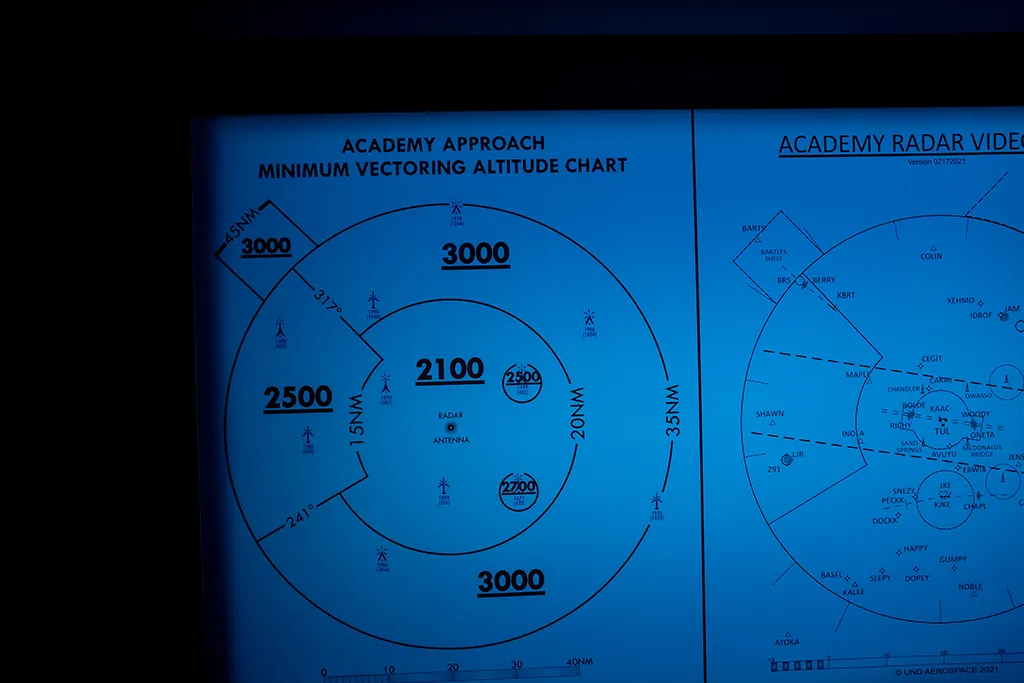
Controllers spend their careers working with radar displays that show aircraft positions, altitudes, speeds, and flight paths. Understanding how to interpret these displays and knowing what they can and can't tell you is fundamental to the job.
Modern air traffic control uses multiple radar systems simultaneously. Primary radar bounces signals off aircraft, while secondary radar receives transponder signals containing detailed flight information. Controllers must understand both systems, recognize when data is unreliable, and make appropriate decisions based on available information.
Students in UND's program train on the Adacel 360° MaxSim Tower/Radar System, which uses a 360° tower view and four synchronized radar positions. The university also operates the UFA ATC Radar Lab with 32 radar simulation terminals, providing extensive hands-on practice with professional-grade equipment.
Aviation Rules and Regulations
Air traffic control operates under strict regulatory frameworks established by the Federal Aviation Administration (FAA) and the International Civil Aviation Organization (ICAO). Controllers must have comprehensive knowledge of these rules, which govern everything from aircraft separation standards to emergency procedures.
These regulations are practical guidelines you'll apply constantly. When can you reduce the separation between aircraft? What are the weather minimums for different types of approaches? How do you handle a lost communications situation? Your mastery of these regulations directly impacts safety and efficiency.
The FAA requires controllers to demonstrate regulatory knowledge through rigorous testing at multiple stages of their careers, making this technical foundation essential for professional success.
Technology Adaptability
Air traffic control systems constantly evolve as new technologies improve safety and efficiency. Today's controllers use digital flight data systems, satellite-based navigation, and automated conflict alert systems that didn't exist a generation ago.
Success in this field requires comfort with technology and a willingness to learn new systems. The FAA regularly introduces updated equipment and procedures, meaning controllers must embrace ongoing training throughout their careers. Those who adapt quickly to technological changes position themselves for advancement and specialized roles.
How to Develop These Skills
The responsibilities that air traffic controllers shoulder are immense, as every instruction they give has a direct impact on the safety of passengers and pilots. That level of accountability means preparation must be just as rigorous.
Developing the skills needed to succeed in this role is centered on structured aviation education and hands-on experience in simulated environments that mirror real operations.
Training Programs and Certification Requirements
Aspiring controllers typically follow one of two paths: military training or civilian education through an FAA-approved Air Traffic-Collegiate Training Initiative (AT-CTI) program. AT-CTI programs like UND's Air Traffic Management BS combine academic coursework with simulation training that mirrors real-world control tower operations.
"I look forward to providing the FAA with highly qualified UND graduates to help alleviate the current air traffic controller shortage," explains Craig Carlson, Assistant Chair of Air Traffic Management at UND. "This program is just what we need to grow the workforce and keep air passengers safe."
Recently, UND was accepted into the FAA's Enhanced AT-CTI program. This is a significant achievement as it enables students to complete the full FAA Academy Tower training curriculum on campus as part of their degree. Upon graduation, they can move directly into on-the-job training at air traffic control facilities, accelerating their path to certification while maintaining the same rigorous FAA standards.
Simulation Exercises and Real-World Practice
Theory alone cannot prepare someone for air traffic control; it takes consistent, hands-on practice in realistic settings. Advanced simulation systems expose students to the full spectrum of situations they will face in their careers, from routine operations to complex emergencies, all within a safe and controlled environment.
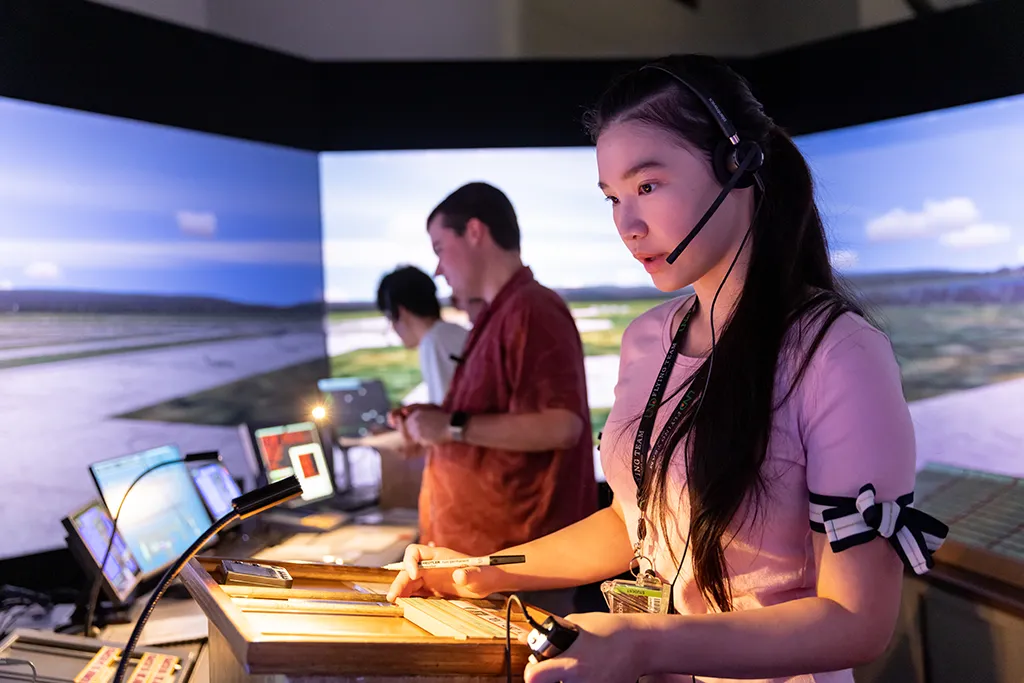
UND's program integrates state-of-the-art tower and radar simulators that mirror real air traffic operations. Students progress through increasingly complex scenarios that strengthen their technical skills, situational awareness, and decision-making ability before they enter the field.
Through these simulations, learners refine their techniques and gain confidence while mastering the coordination and precision required to manage live airspace safely.
Continuing Education and Professional Development
Your education doesn't end when you earn your degree or complete FAA training. Those who excel in this field generally continue to develop their expertise through ongoing education in order to make sure that they stay current with evolving procedures, technologies, and operational standards.
The FAA requires regular recertification and continuing education for all controllers. Many professionals also earn additional ratings that open opportunities in specialized areas or advanced facility types. This dedication to continual learning defines the difference between skilled controllers and outstanding ones.
With more than 50 years of experience training air traffic professionals, UND's Bachelor of Science in Aeronautics with a major in Air Traffic Management reflects that same long-term commitment. Graduates of the program now serve in control towers and centers across the nation and around the world.
Mastering the Skills That Keep Skies Safe
While some people may naturally show an instinct for air traffic controller skills such as communication or composure, these strengths become actual professional readiness only through aviation-focused training. Applying them in the fast-paced reality of air traffic control calls for structure, consistency, and guided experience.
At UND, the Air Traffic Management B.S. program provides that foundation. The program combines a strong academic base with early, hands-on practice in tower labs and radar simulations, equipping students with the knowledge and training needed for the responsibilities that come with managing airspace.
FAQs
Controllers can manage stress through a mix of habits and training. They stay physically active, use mindfulness or breathing techniques, take regular breaks during shifts, and build emotional resilience through realistic high-pressure simulations.
Many find multitasking under pressure and maintaining precise attention to detail the most difficult to develop. However, both can be improved through structured practice and guided experience in realistic training environments.