How Does Music Therapy Work? Benefits & Methods
Many people turn to music for comfort. It's there during moments of celebration and in the quiet aftermath of heartbreak.
Request Information
Over time, that natural connection has evolved into an established form of treatment known as music therapy.
The question "how does music therapy work?" has led to a growing body of scientific research that connects musical engagement to emotional regulation and cognitive resilience.
Key Takeaways
- Music therapy is a clinical practice that uses music purposefully to improve emotional, physical, and cognitive health.
- Music therapists use various methods such as rhythmic stimulation, songwriting, improvisation, and guided listening to promote healing.
- Music therapy supports neurological recovery, strengthens cognition and emotional regulation, reduces pain and stress, enhances social connection, and promotes overall well-being.
What is Music Therapy?
Music therapy is a structured, evidence-based practice in which musical techniques are used within a professional therapeutic relationship to address individual needs. While music can be comforting and familiar, music therapy goes far beyond simply listening to a favorite song or picking up an instrument. Each session is purposefully designed and led by a trained therapist to support specific therapeutic goals over time.
As Professor Carly Flaagan, Director of the Music Therapy program at the University of North Dakota, explains, "loosely and broadly put, music therapy is using music to improve quality of life." She further defines the field as using "music as an agent of change to improve quality of life or healthcare outcomes across the lifespan within an established therapeutic relationship."
The idea that music holds sway over the mind and body is not necessarily new. Since antiquity, philosophers have debated its purpose and effect on the human spirit. In ancient Greece, Plato and Aristotle viewed music less as an art and more as a moral and educational force, as something that could influence character and guide civic life.
Medieval thinkers connected music to the harmony of the cosmos, seeing it as a reflection of divine order. As musical tastes evolved over centuries, so did the questions: Why does a melody move us? How can sound stir emotion or restore calm?
By the eighteenth century, philosophers began to ask what music actually expresses, especially as instrumental works grew more complex and popular. This shift helped lay the foundation for what we now understand in a scientific light: music affects us emotionally and neurologically.
How Does Music Therapy Work?
When you listen to music, multiple regions of the brain activate at once, which are involved in emotion, memory, movement, and language. That's the basis of music therapy.
Rhythm is one of the most widely studied aspects of music in neuroscience. Studies involving stroke rehabilitation and Parkinson's therapy have examined its role in supporting motor function and gait control, though results can vary depending on the individual and setting.
Melody and harmony engage different neural circuits. Variations in tone, key, and tempo are known to influence emotional processing in the brain, and emerging research is examining how these elements can be used intentionally in clinical practice.
When lyrics are added, music becomes a layered tool for self-expression. Therapists may use songwriting or lyric discussion as part of structured interventions, and ongoing studies are investigating how these practices relate to memory recall, emotional regulation, and identity formation.
Techniques Used in Music Therapy
Music therapists use a wide range of techniques. Some resemble everyday musical experiences, while others are developed specifically for therapeutic use through clinical training and research.
What a therapist uses depends on the individual they're working with, what that patient enjoys, what they're comfortable with, and what might support their mental, emotional, or physical well-being.
Active Participation
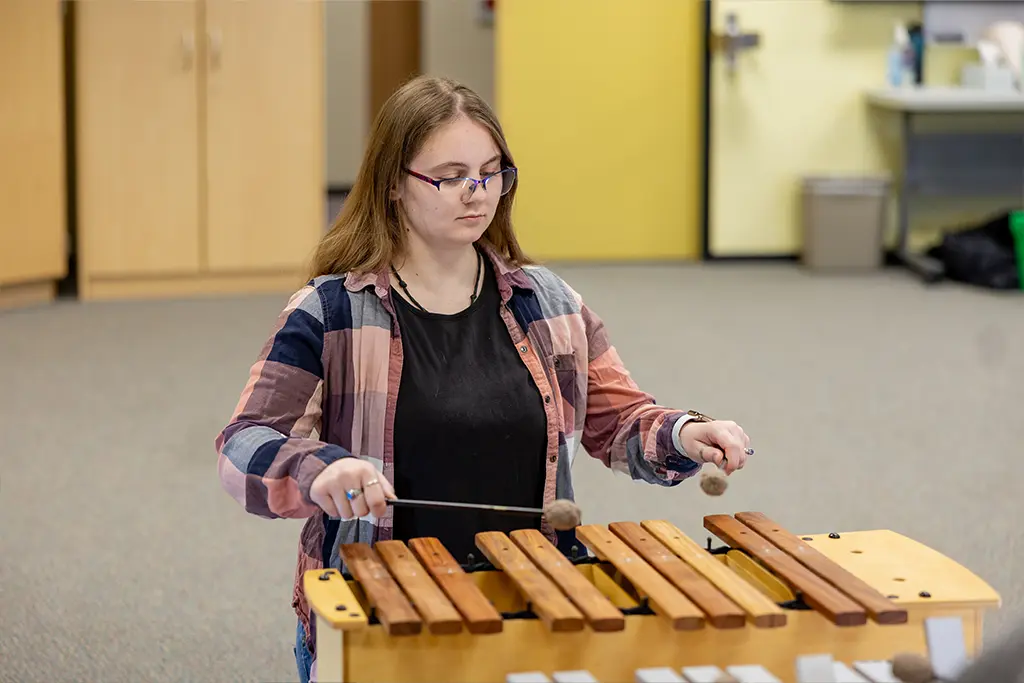
Active participation involves hands-on engagement with music. It encourages expression, interaction, and connection through doing rather than just listening. Common techniques include:
- Singing activities, such as echoing melodic phrases, improvising vocal lines, matching pitch, or singing familiar songs.
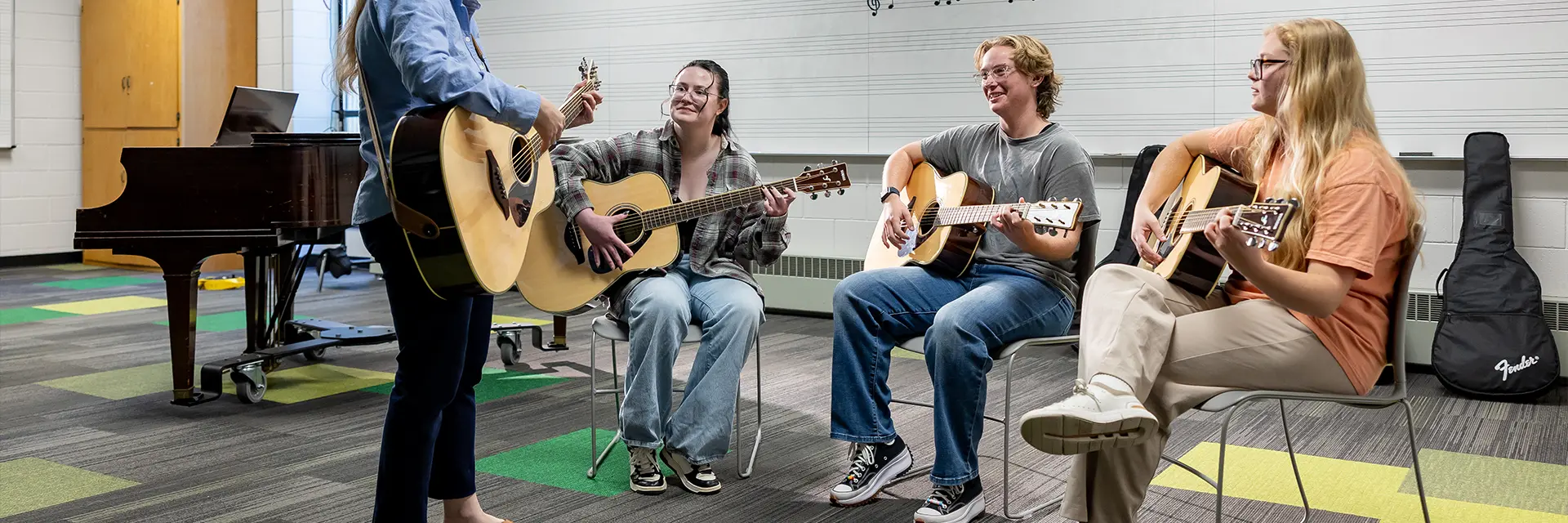
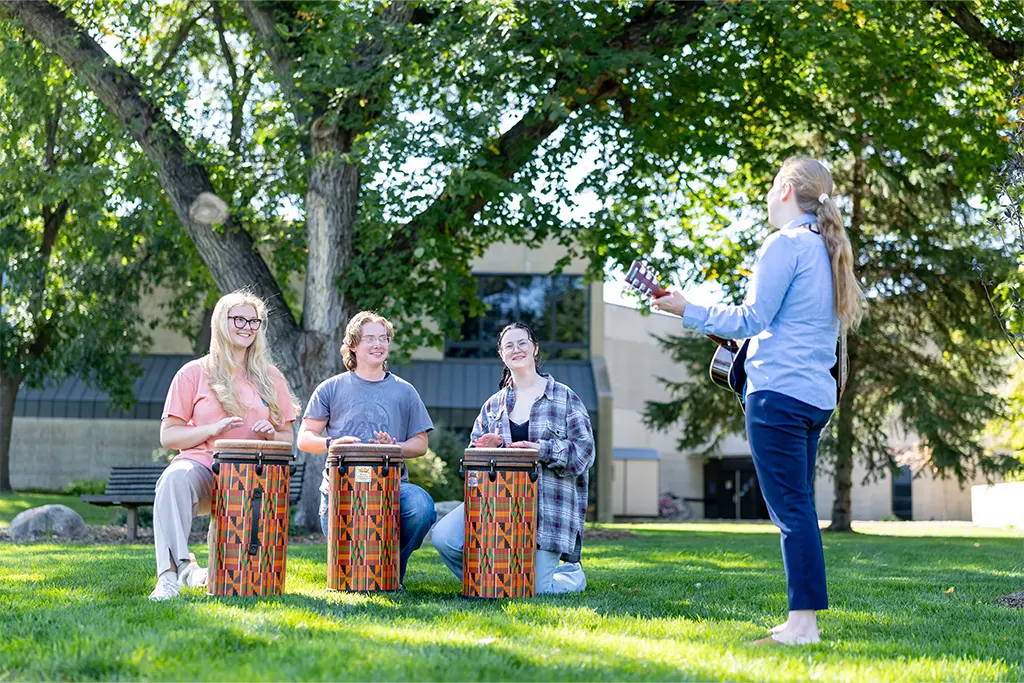
- Instrument play, using tools like drums, shakers, xylophones, or ukuleles for rhythmic games, improvisation, or structured play.
- Songwriting, where the therapist and client co-create lyrics or melodies, build from chord progressions, or adapt known tunes.
Listening Techniques
Receptive music therapy focuses on the act of listening. Rather than making music, clients respond to it emotionally, cognitively, or physically. Listening techniques can include:
- Guided listening, where clients reflect on tempo changes, emotional responses, or mental imagery triggered by music.
- Playlist building, which involves selecting tracks that mirror the client's mood, identity, or cultural background.
- Relaxation listening, using ambient textures, slow classical pieces, gentle nature sounds, or lullaby-style songs.
- Integrated techniques, where music accompanies breathwork, muscle relaxation, visual focus, or meditative scanning.
Movement-Based Approaches
Since music naturally invites physical response, therapists often use movement to support expression, rhythm, and embodiment. Movement techniques may involve:
- Structured movement, like walking to a beat, following a pattern, swaying side-to-side, or mirroring the therapist's gestures.
- Rhythmic interaction, using clapping games, drumming patterns, circle movement, or instrument passing in time with music.
- Expressive movement, such as dancing with scarves, moving to reflect mood changes, or drawing shapes in the air with arms.
- Adapted movement, tailored to physical ability through seated swaying, finger tapping, guided stretching, or toe-tapping.
Improvisation and Creative Expression
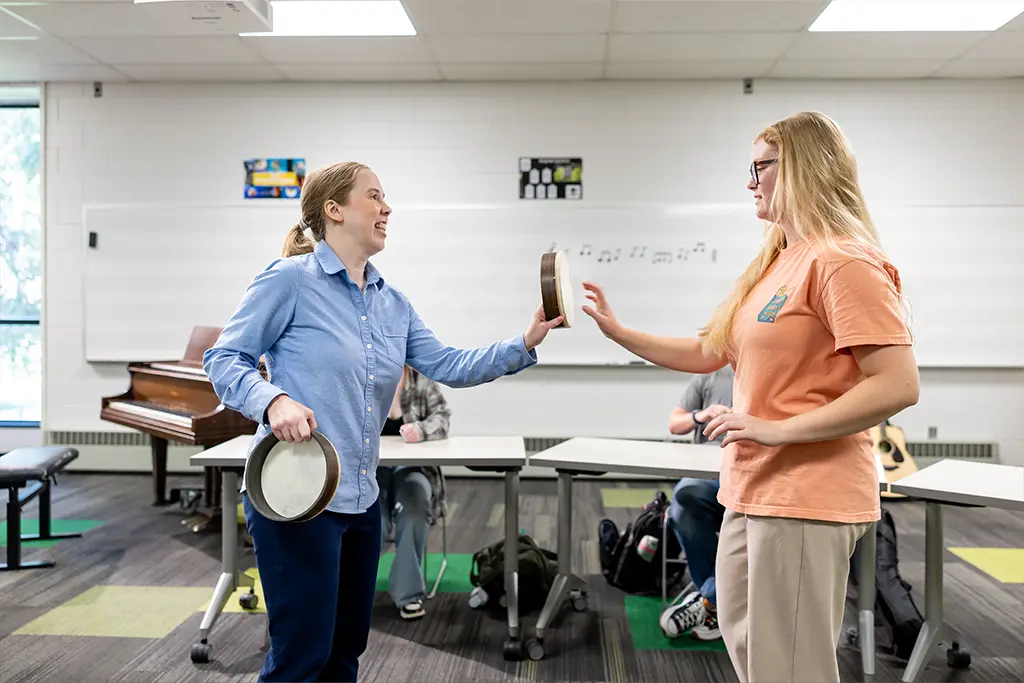
Improvisation involves creating music spontaneously. It gives clients freedom to explore sound and emotion without rules. Approaches to improvisation include:
- Instrumental improvisation, using keyboards, drums, or found objects to create spontaneous rhythms or melodies.
- Musical dialogue, where client and therapist take turns, echo patterns, or layer sounds to build a shared musical moment.
- Sound painting, using voice, movement, or percussion to express texture, tempo, or shape in response to internal states.
- Technology-supported improvisation, involving apps, digital tools, or loop stations to encourage interactive sound exploration.
Benefits of Music Therapy
Research consistently demonstrates that music therapy produces measurable improvements across multiple domains of health and well-being.
Published in 2023, "Music Therapy and Music-Based Interventions in Neurology" by Devlin, Kang, & Pantelyat, offers one of the most up-to-date examinations of how music can support neurological health and overall well-being. It brings together findings from neuroscience, psychology, and clinical practice to show that music therapy is a scientifically grounded therapeutic approach with wide-ranging benefits.
Among the benefits highlighted by the editors are:
Neurological and Motor Benefits
Music therapy promotes recovery in patients with neurological conditions such as stroke, Parkinson's disease, and traumatic brain injury by engaging mechanisms like auditory-motor coupling and activity-dependent neuroplasticity.
Through techniques such as RAS and Therapeutic Instrumental Music Performance (TIMP), rhythm and movement synchronize to retrain motor pathways and restore coordination. These interventions improve gait, balance, and upper-limb control, demonstrating that music can literally rewire the nervous system and accelerate physical rehabilitation.
Cognitive and Emotional Benefits
Engagement with music enhances executive function, working memory, and emotional regulation, particularly in individuals recovering from brain injury or coping with neurodegenerative diseases.
By activating the prefrontal cortex and limbic structures, music stimulates both cognitive control and affective stability. Listening, improvising, or performing can elevate mood through dopaminergic reward systems, which are essential for motivation and resilience in rehabilitation.
Psychosocial and Quality-of-Life Benefits
Music therapy strengthens social connection, self-expression, and emotional attunement, helping patients rebuild identity and communication in the face of neurological challenges. Group singing and songwriting foster belonging and emotional release while improving speech, cognitive engagement, and confidence.
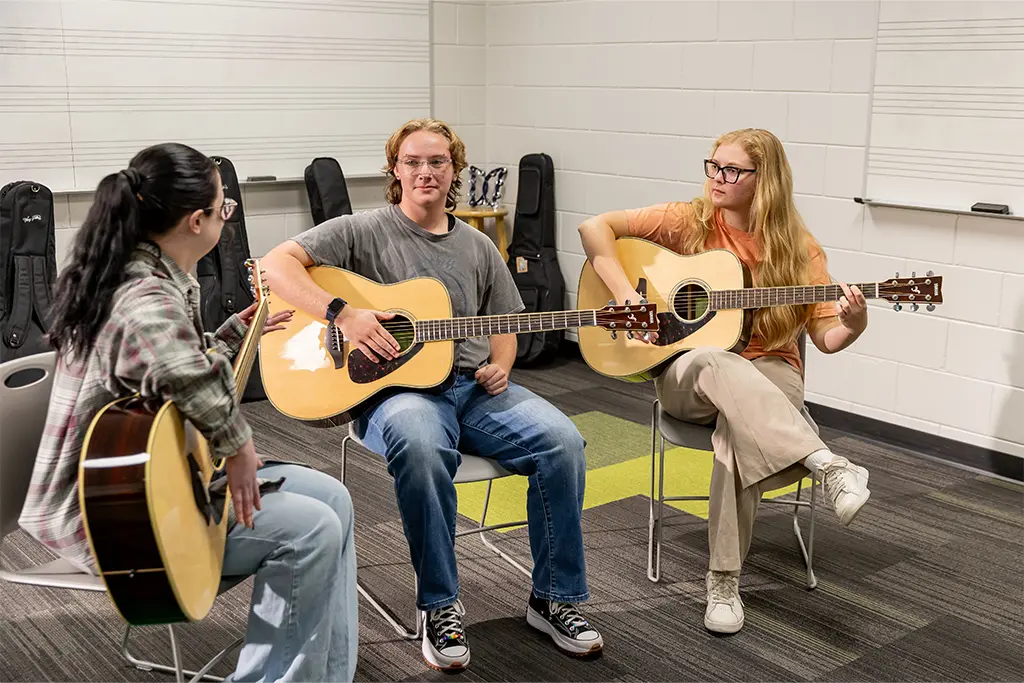
For caregivers, participating in these sessions creates meaningful shared experiences that deepen relationships and reduce isolation. These interactions build psychosocial resilience, contributing to a higher quality of life for both patients and their support networks.
Pain Relief and Stress Reduction
Musical engagement alleviates pain by influencing the neuromatrix, limbic system, and descending pain modulatory system (DPMS). Listening to or creating music lowers stress hormone levels, activates parasympathetic responses such as slower breathing and heart rate, and increases oxytocin—the hormone associated with bonding and calm. These effects make music therapy a valuable non-pharmacological approach for both acute and chronic pain management.
Holistic and Integrative Care
Music therapy encourages a holistic model of healing that unites the physical, emotional, and social dimensions of care. When treated as a central therapeutic service rather than an adjunct, it allows clinicians to collaborate across disciplines, ensuring that patients receive treatment responsive to both medical needs and personal meaning. This integration enhances rehabilitation outcomes and promotes long-term well-being.
How to Become a Music Therapist
Many people listen to music to relax and reflect. But what transforms music into a therapeutic experience is the training and structure of the person guiding it. Licensed music therapists conduct sessions informed by neuroscience, psychology, and musical expertise—knowledge and skills that come from structured education and supervised practice.
Educational Requirements
Licensed music therapists are trained professionals equipped to deliver therapy in a structured, evidence-based way. They are required to earn a bachelor's degree in music therapy or a closely related field. In the United States, programs must be accredited by the American Music Therapy Association (AMTA), ensuring students receive comprehensive training in both music and clinical practice.
After completing an approved program and internship, graduates are eligible to take the national board certification exam administered by the Certification Board for Music Therapists (CBMT). Passing this exam grants the MT-BC credential, which is recognized across the United States and required for professional practice in most settings.
At the University of North Dakota, students can pursue this career through the Bachelor of Music in Music Therapy, the only undergraduate program of its kind across North Dakota, South Dakota, Montana, Nebraska, Idaho, and Wyoming.
"We are thrilled to be able to prepare students for this career that serves the people of their communities," says Scott Sandberg, chair of UND's Department of Music. "Music therapy benefits individuals across all dimensions of society. Therapists work with people of all ages in relation to mental health, developmental and physical disabilities, age-related conditions such as Alzheimer's, as well as addiction, chronic pain, and more."
Essential Skills Required
Working in music therapy requires emotional intelligence and adaptability to guide clients through complex personal and psychological challenges. Among the most important skills are:
- Musical proficiency: Therapists must be skilled in voice, instruments, and composition to use music effectively across different clinical needs.
- Strong communication skills: Sessions often rely on nonverbal cues and emotional awareness, so clear, compassionate communication is crucial for building trust and understanding.
- Empathy and compassion: Clients may be coping with pain, trauma, or loss, and therapists must approach each session with patience and sensitivity.
- Creativity and flexibility: Every client responds differently to music, so therapists need to adjust activities, instruments, and approaches on the spot.
- Psychological insight: Understanding mental health, cognition, and behavior helps therapists interpret responses and design interventions that truly support healing.
Turn Your Passion for Music Into a Healing Career
Music therapy stands at the intersection of art and science, creativity and clinical practice. It's a field that combines empathy with evidence, using the language of music to support healing. Few professions allow for such a balance between human connection and structured intervention, making it a genuinely meaningful career option for those who want their work to make a difference.
If this blend of compassion, creativity, and research-based practice speaks to you, consider studying Music Therapy at the University of North Dakota. The program offers both the musical foundation and clinical preparation needed to turn an interest in helping others into a professional practice that improves lives.
FAQs
A bachelor's degree in music therapy takes four years, followed by a six-month internship before you're eligible for board certification.
Piano, guitar, percussion instruments, and voice are most common, though therapists adapt instrument choices based on client needs and preferences.
Music therapy is a clinical practice requiring professional credentials and evidence-based interventions, while sound therapy is a wellness practice using sound frequencies without formal clinical training requirements.