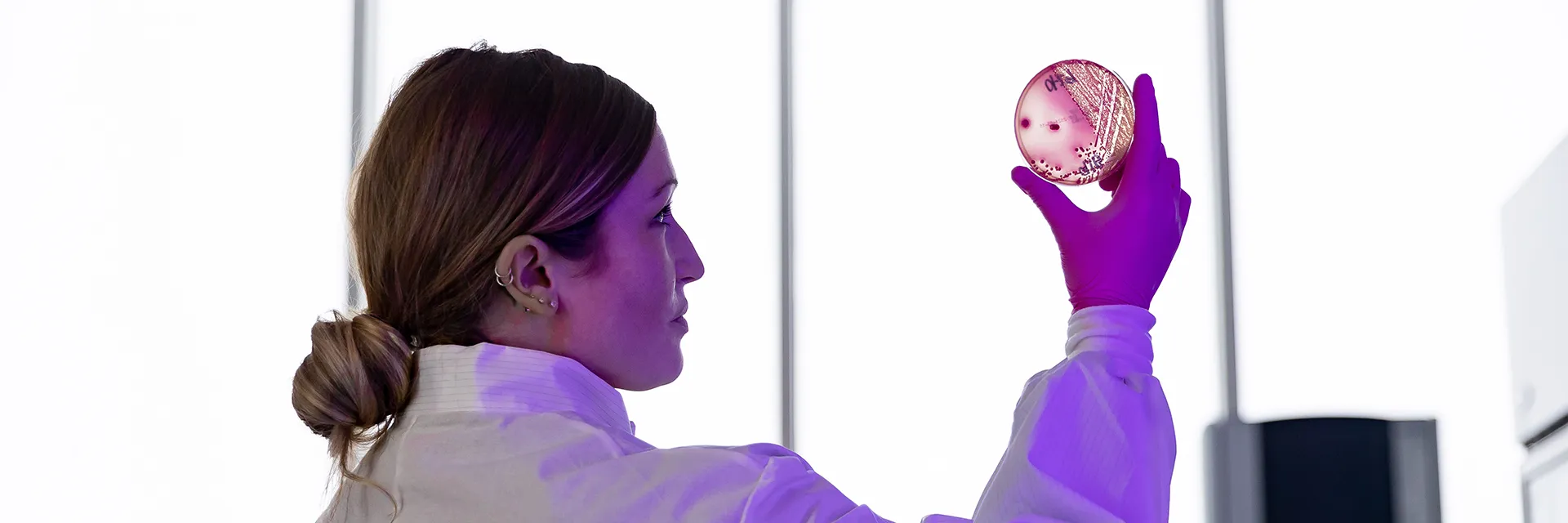
How to Become a Medical Laboratory Scientist
Every medical decision begins with evidence, and that evidence comes from the laboratory.
Request Information
Doctors can examine symptoms and ask all the right questions, but without accurate lab results, the whole process of diagnosing and treating someone becomes slower, riskier, and much less precise. Medical laboratory science (MLS) is crucial for modern medicine as it helps provide the data that guides treatment decisions, confirms diagnoses, tracks how a condition is changing, and gives physicians something dependable to act on
Medical laboratory science is an excellent path into healthcare for those who want to make a direct impact without the pressures or intensity of daily patient care. If it's a field you're considering, understanding how to become a medical laboratory scientist starts with the major steps ahead: the education you'll need, the clinical training that builds hands-on skill, and the certification and licensure requirements that qualify you to work in this role.
Key Takeaways
- A medical laboratory scientist analyzes patient samples and delivers precise results that support accurate diagnosis and treatment across healthcare settings.
- Becoming a medical laboratory scientist typically requires a bachelor's degree accredited by the National Accrediting Agency for Clinical Laboratory Sciences (NAACLS), hands-on experience, certification, and meeting any state licensure requirements before entering practice.
- Success as a medical laboratory scientist depends on strong technical ability in testing, instrumentation, quality control, careful attention to detail, clear communication, problem-solving, and effective teamwork.
What Does a Medical Laboratory Scientist Do?
Medical laboratory scientists are crucial members of the medical field, even if patients rarely see them. As Kelli Maddock, a laboratory section head at the North Dakota State University Veterinary Diagnostic Laboratory and a University of North Dakota (UND) graduate student, explains, "We are the unseen professionals behind the scenes in diagnostic medicine." Their work takes place out of sight, yet it directly supports nearly every diagnosis made in hospitals, clinics, and laboratories.
These professionals collect and analyze biological specimens, from blood and urine to tissue samples, to provide physicians with accurate, reliable data for patient care. They work in hospital laboratories, diagnostic centers, research facilities, veterinary laboratories, and public health agencies. The results they generate guide treatment decisions, confirm suspicions, rule out disease, and monitor recovery.
Despite their impact, the profession often receives less public recognition than other healthcare roles. Maddock reflects on this reality candidly: "There is so much about our profession that is overlooked and underappreciated," she said. "The instructors at UND helped me see the importance of sharing our profession and how widely we can have an impact."
Her perspective captures the central truth of medical laboratory science. The work may happen behind closed lab doors, but its influence reaches every corner of modern healthcare.
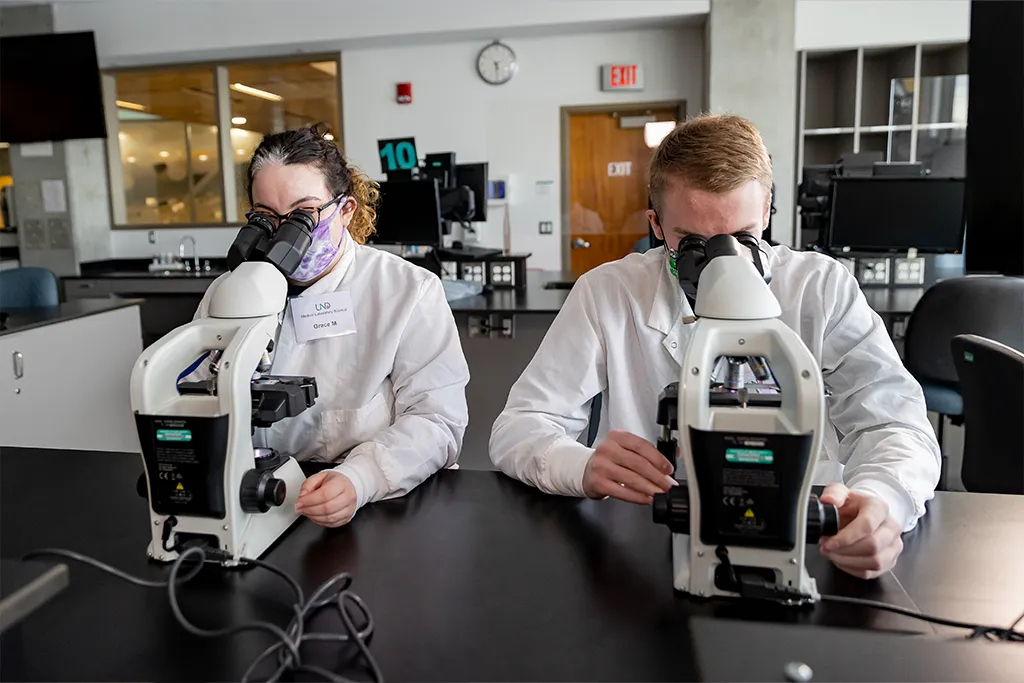
Some of their core responsibilities include:
- Preparing and examining samples under strict lab conditions
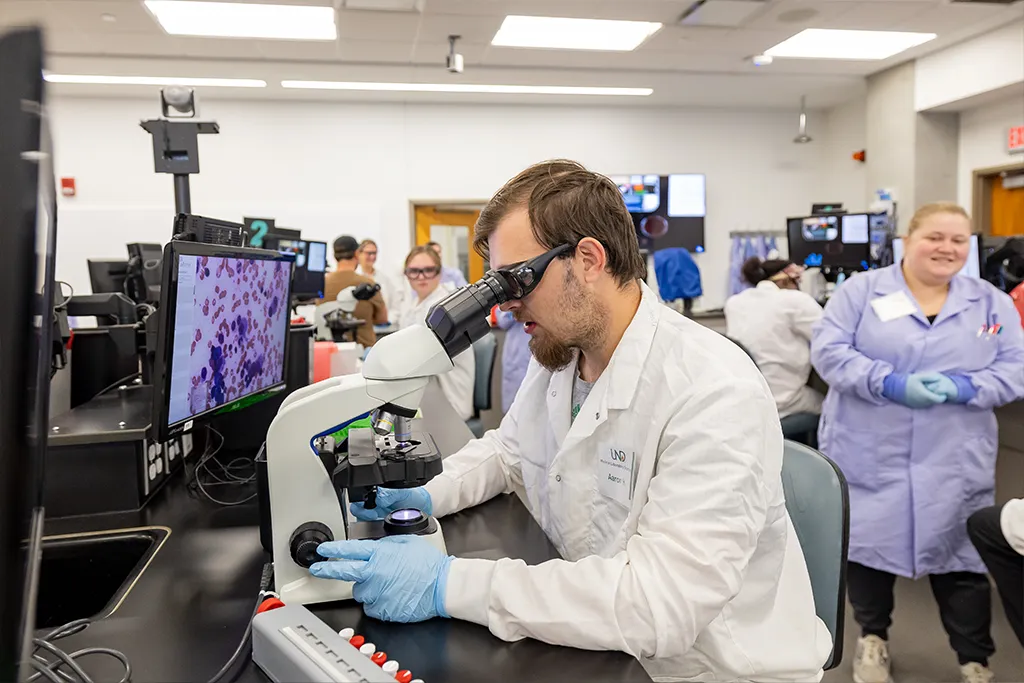
- Running and maintaining diagnostic equipment like automated analyzers and microscopes
- Interpreting results and identifying abnormalities
- Upholding quality control and regulatory standards
- Partnering with pathologists, physicians, and other healthcare professionals
How to Become a Medical Laboratory Scientist
Becoming a medical laboratory scientist requires a blend of structured education, hands-on training, and credentialing. It's a process where each step builds on the others.
Step 1: Earn a Bachelor's Degree
A four-year bachelor's degree in Medical Laboratory Science or another related major like Medical Technology or Biological Sciences is the usual starting point for students looking to pursue such a career.
In addition to the field of study itself, what matters is choosing a program that has been accredited by the NAACLS. Such accreditation signals that the curriculum meets national standards and qualifies you for certification exams.
University of North Dakota (UND) offers a Bachelor's in Medical Laboratory Science Degree that is NAACLS-accredited. It combines classroom learning with laboratory experience and clinical rotations to prepare students for certification and everyday practice.
Most MLS programs cover:
- Foundational sciences like biology, chemistry, and microbiology
- Instrumentation and laboratory techniques
- Clinical rotations in a hospital or diagnostic labs
- Training in regulatory compliance and quality assurance
If you already hold a science degree and would like to pivot toward the medical laboratory science field, then a post-baccalaureate Certificate or accelerated second degree in Medical Laboratory Science can give you the specialized training and clinical experience needed to sit for certification.
Step 2: Gain Hands-On Experience
Clinical rotations are often the point at which, for many, everything starts to feel real. You move from controlled classroom labs into patient-facing samples and real diagnostic workflows. Rotations usually take place in hospitals, clinics, or reference labs.
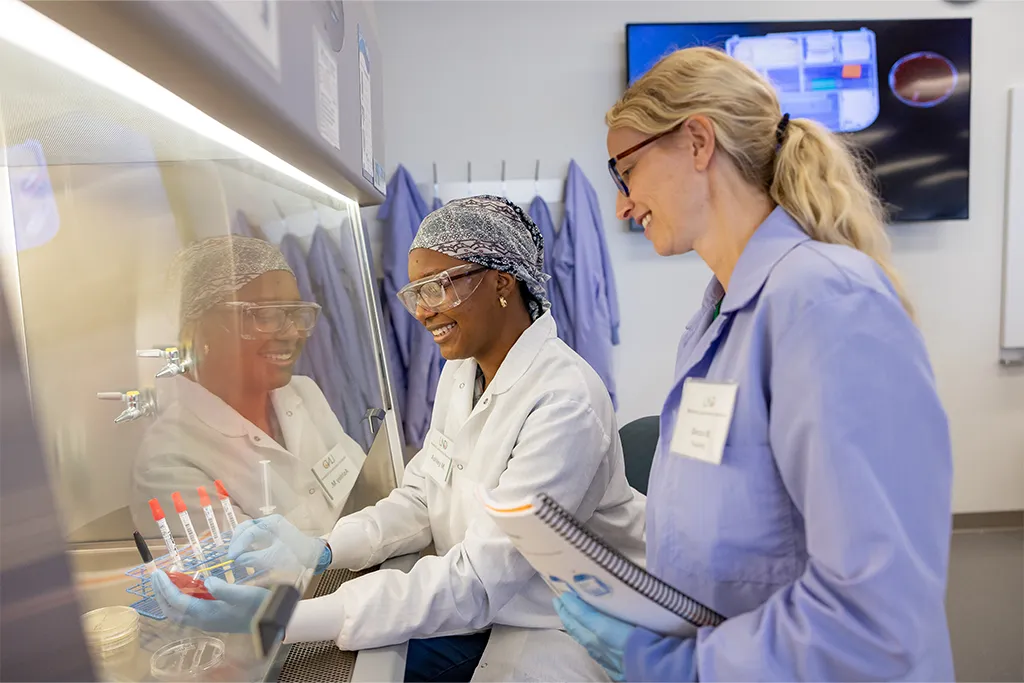
In terms of medical laboratory science, during this stage, you'll receive supervised training in:
- Blood banking: Typing blood, cross-matching, antibody identification
- Microbiology: Culturing, identifying bacteria and other micro-organisms
- Chemistry: Running metabolic panels and analyzing chemical markers
- Hematology: Identifying blood cell abnormalities
These rotations often last several months, building both your technical confidence and your understanding of how fast-paced lab environments really operate. They also fulfill the hands-on requirements needed for certification and, in some states, licensure.
Step 3: Get Certified
Certification is the checkpoint most employers look for. The American Society for Clinical Pathology Board of Certification (ASCP BOC) is the most recognized credentialing organization, awarding the MLS (ASCP) credential.
To qualify for the exam, you must:
- Earn a bachelor's degree from a NAACLS-accredited program, or
- Complete a post-baccalaureate certificate program with clinical training
The MLS (ASCP) exam covers topics such as:
- Clinical chemistry
- Hematology
- Microbiology
- Immunology
- Blood banking
- Laboratory operations and quality assurance
While ASCP is the industry standard, alternative certifying organizations include American Medical Technologists (AMT) and the American Association of Bioanalysts (AAB). After earning certification, you'll maintain it through continuing education and periodic recertification.
Step 4: Meet State Requirements
In addition to the national certification, there are also several states that require licensure as a prerequisite to practicing as a medical laboratory scientist. For licensure, requirements vary but may include:
- An application and fee
- Proof of education and clinical training
- Passing a state-specific exam or proving national certification
There are currently 10 states that have laboratory personnel licensure requirements. These states include California, Hawaii, Florida, New York, North Dakota, Tennessee, Louisiana, Nevada, West Virginia, and Montana. Puerto Rico also has licensure requirements.
It's important to double-check the rules through your state's Department of Health or licensing board.
Skills and Qualities for Success
Success in this career relies on both technical and personal skills.
Among the most important technical skills needed for these scientists to complete their duties are:
- Proficiency in lab testing procedures
- Skilled use of diagnostic instruments
- Understanding of regulatory requirements and quality control
- Ability to interpret complex test results
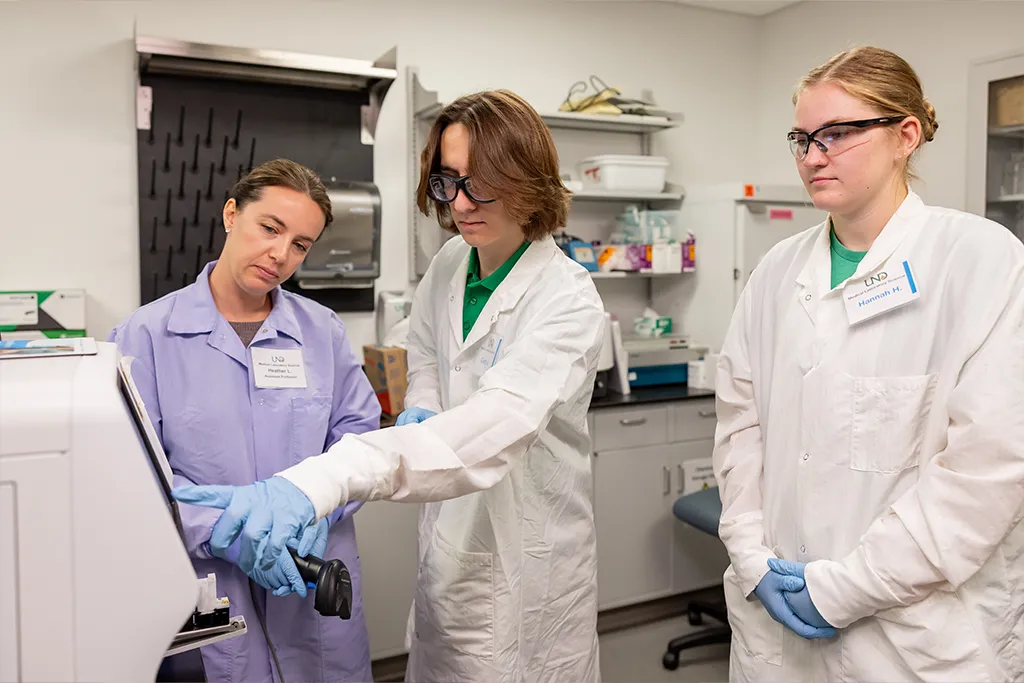
Just as important are the following soft skills:
- Attention to detail: Mistakes can influence diagnosis or treatment.
- Problem-solving: Troubleshooting equipment and identifying anomalies.
- Teamwork: Working alongside physicians, nurses, and fellow lab professionals.
- Communication: Clearly explaining results or procedures to medical staff—and occasionally patients.
Career Outlook and Salary
The career outlook for medical laboratory scientists is consistently steady, with long-term demand driven by various factors like an aging population, expanded diagnostic testing, and ongoing needs across hospitals and research settings.
According to the U.S. Bureau of Labor Statistics, employment for clinical laboratory technologists and technicians is expected to grow 2% from 2024 to 2034, while roles in medical research and laboratory science, categorized as medical scientists, are projected to grow 9% during the same period. Because MLS professionals work across both clinical and research environments, the field benefits from the stability of one category and the faster growth of the other.
Salary ranges reflect this same spectrum. The BLS reports a median annual wage of $61,890 for clinical laboratory technologists and technicians, and $100,590 for medical scientists. MLS professionals typically fall between these benchmarks, with higher earnings possible in regions with laboratory shortages, in roles requiring advanced specialization, or with several years of experience.
Related Programs and Career Advancement
Many medical laboratory scientists eventually decide to continue their education and training in pursuit of leadership opportunities, or sometimes because they're drawn to the deeper technical work of policy, research, or quality management. As the field grows more complex, that extra training becomes one of the clearest ways to widen what's possible in their careers.
One option is pursuing a graduate degree. Programs in Clinical Laboratory Science, Biomedical Science, or Public Health give you a broader scientific foundation and open up paths toward supervisory roles or more specialized lab positions. And if someone feels pulled toward teaching, research, or overseeing entire laboratory operations, doctoral training gives them the depth they need to move into high-level academic or administrative work.
Ongoing learning is also built into the profession. Certifying organizations require continuing education to maintain credentials, which helps MLS professionals stay current with new testing platforms, laboratory regulations, and fast-evolving diagnostic technologies. This continuous skill-building supports both career mobility and patient safety.
As professionals gain experience, many choose to specialize. Areas such as immunology, molecular diagnostics, and microbiology offer room to develop advanced expertise and often lead to titles like laboratory supervisor, quality assurance manager, or clinical research scientist. Specialization not only increases day-to-day responsibility but can also expand earning potential and influence within the clinical environment.
Conclusion
The path to becoming a medical laboratory scientist is clear: earn a relevant bachelor's degree, complete your clinical rotations, pass the national certification exam, and meet any state licensure requirements. Once you reach that point, you'll be entering a stable, meaningful profession where your work supports diagnoses and guides treatment decisions for better patient care.
Becoming a medical laboratory scientist takes commitment, but the responsibility that comes with the role makes that commitment worthwhile. Those who choose any medical career take on an important role that affects real lives; therefore, the quality of their training matters. UND's program helps students interested in MLS to develop the precision, judgment, and skills that laboratory work requires so they can enter the profession ready to make a contribution.
FAQs
The bachelor's degree usually takes four years, including classroom work and clinical rotations.
It's demanding, with strict accuracy and technical expectations, but your training prepares you to handle those responsibilities.
MLS graduates can work in hospitals, diagnostic labs, public health agencies, or research settings, and many advance to roles in supervision, quality assurance, or specialized laboratory areas.