How to Become an Air Traffic Controller: Training and Skills
Many kids grow up gazing at the sky and tracing the path of airplanes overhead.
Request Information
For some, that childhood fascination becomes a lifelong ambition to become a pilot. But as they grow older and learn more about the demands of the job, not everyone finds the cockpit calling. What many don't realize, though, is that aviation offers a wide range of exciting careers beyond flying the plane itself.
If you're interested in aviation but want to contribute in a different way, air traffic control might be the one that fits. Understanding how to become an air traffic controller starts with the right training and qualifications so that you are prepared to guide aircraft with confidence.
Key Takeaways
- Becoming an air traffic controller requires meeting FAA standards, completing specialized training, and earning certification through structured stages.
- FAA-approved programs provide students with a competitive edge through simulation-based, hands-on preparation.
- Success in this career requires focus, effective communication, composure, and several other skills that can be developed through education and ongoing training.
How to Become an Air Traffic Controller
Becoming an air traffic controller combines education, rigorous testing, and extensive on‑the‑job training through the FAA Academy and facility certification. The process typically follows several structured stages, each with its own requirements.
Meet Basic Requirements
Before you can even apply to become an air traffic controller, you'll need to meet several fundamental eligibility requirements set by the Federal Aviation Administration (FAA).
You must be at least 18 years old (but under the age of 31) and a U.S. citizen. The FAA also requires candidates to meet specific medical and vision standards; your health needs to support the demands of managing high-pressure situations for extended periods.
Strong English proficiency is another non-negotiable since clear communication is the foundation of air traffic control work.
Additionally, you'll undergo thorough background checks and security clearance processes. The FAA takes these prerequisites seriously because air traffic controllers hold positions of significant public trust and safety responsibility.
Complete the Required Education
While it's technically possible to enter the field with just a bachelor's degree in any field combined with work experience, having specialized aviation education dramatically improves your chances. Most successful candidates hold degrees in aviation, engineering, or related technical fields.
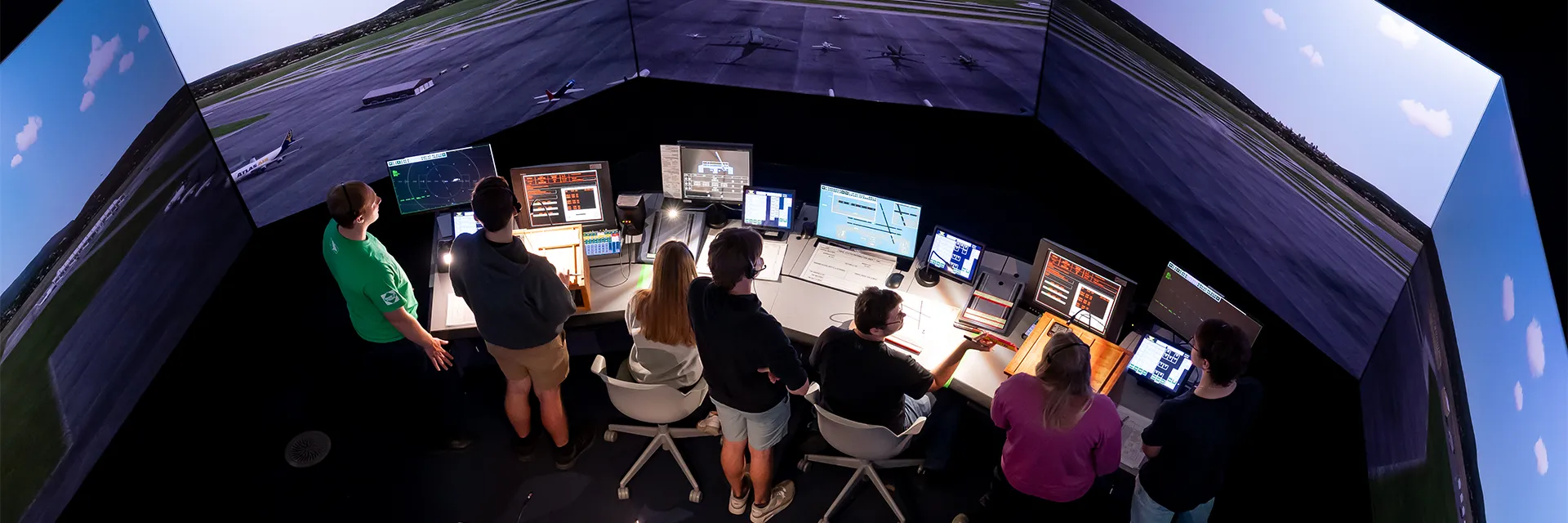
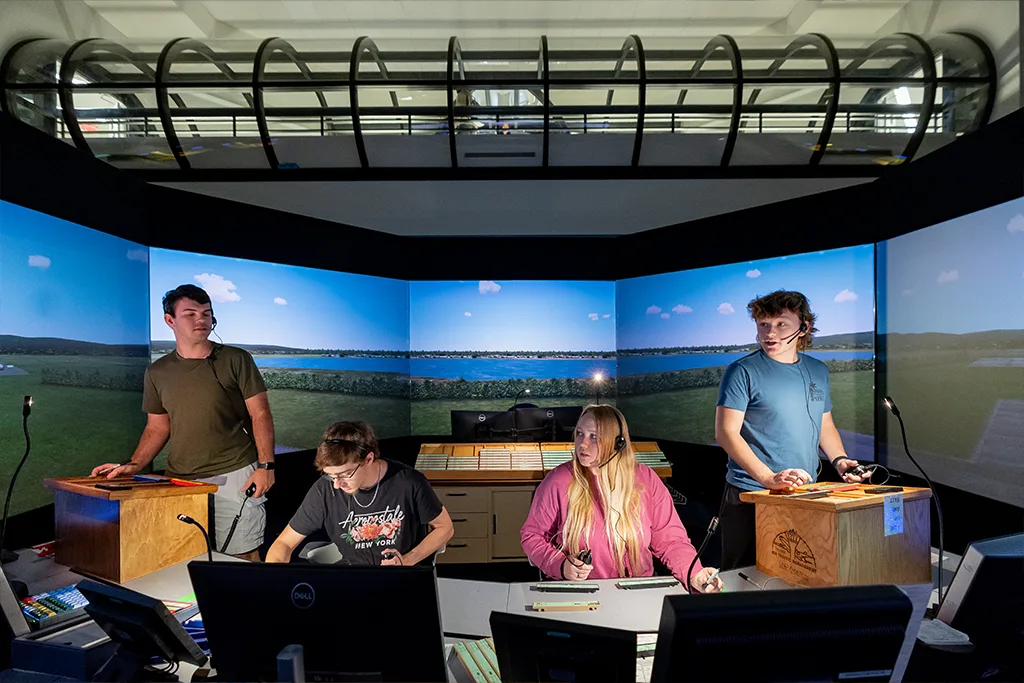
Attending an FAA-approved Air Traffic-Collegiate Training Initiative (AT-CTI) program is one of the most direct paths into the profession. These programs, like the one offered through the University of North Dakota's Air Traffic Management BS, provide coursework that aligns directly with the FAA Academy curriculum. You'll gain hands-on experience with advanced simulators, learn radar and tower operations, and study aviation safety management.
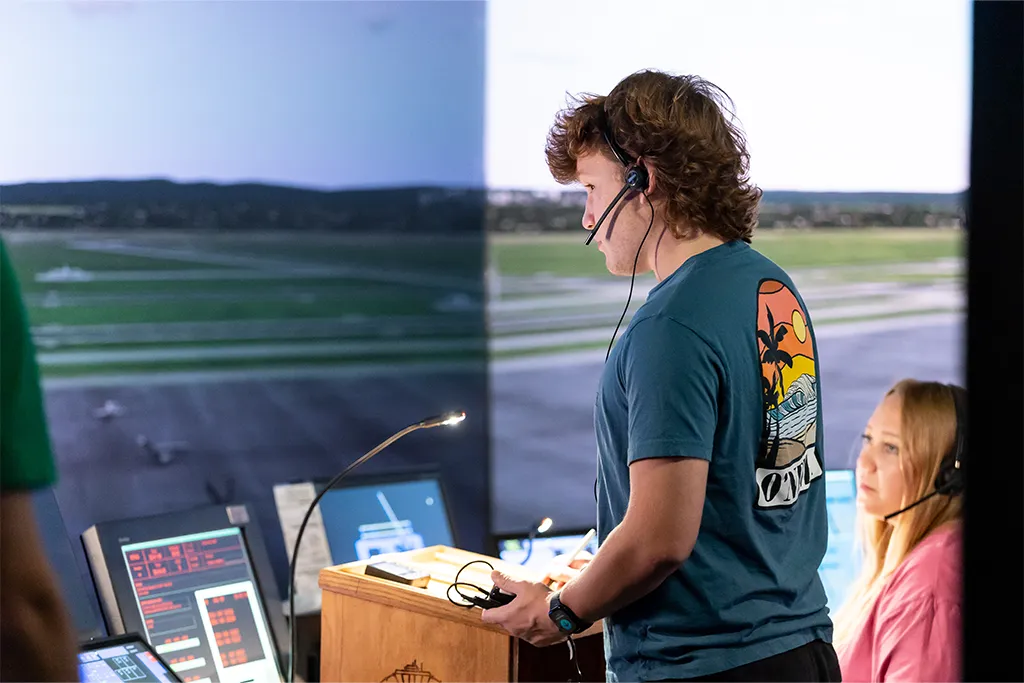
At UND, students train on the Adacel 360° MaxSim® ATC Tower/Radar System, which features 360° tower views and synchronized radar positions, plus the UFA ATC Radar Lab as the most modern 32-position radar simulation lab in the country. This level of preparation gives graduates a competitive edge when entering the FAA hiring process.
Maintaining a strong academic record throughout your education is essential. The FAA hiring process is competitive, and your educational background plays a significant role in your application strength.
Apply and Pass the FAA Hiring Process
Once you've completed your education, you'll need to navigate the FAA's competitive hiring process. All air traffic controller positions are posted through USAJOBS, the federal government's official employment site.
Part of the application process is also the Air Traffic Skills Assessment (AT-SA) exam. This computer-based test evaluates your spatial reasoning, multitasking ability, and other cognitive skills essential for air traffic control work.
In addition to the exam, you'll face psychological and aptitude testing designed to assess whether you can handle the mental demands of the job. The FAA uses structured interviews to evaluate candidates' problem-solving abilities, communication skills, and overall fit for the role.
It's worth noting that the hiring process is highly competitive. Thousands of candidates apply each year, but only a fraction are selected. Preparation is the most important part in guaranteeing you are a strong candidate.
Train at the FAA Academy
If you're selected through the hiring process, you'll be sent to the FAA Academy in Oklahoma City for intensive training. This is where your real education as an air traffic controller begins.
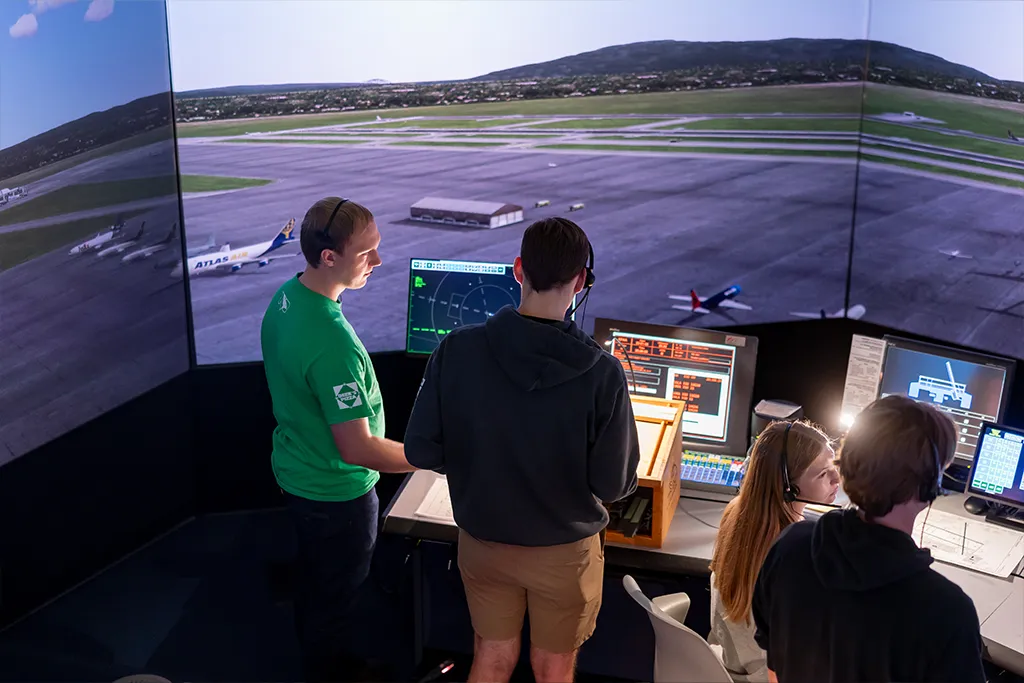
Academy training combines classroom instruction with simulation exercises and scenario-based training. You'll learn the specific procedures, phraseology, and decision-making frameworks that air traffic controllers use every day. The duration of your training varies depending on your assigned specialty—tower, TRACON (Terminal Radar Approach Control), or en-route center operations.
Performance evaluations at the Academy are strict and ongoing. You need to pass all training modules to move forward, and the standards are high. Not everyone who enters the Academy graduates—this is where theoretical knowledge meets practical application under pressure.
For UND graduates, there's an additional advantage. Thanks to a recent FAA Air Traffic Control agreement with UND, qualified students can fast-track into needed positions, streamlining the path from education to employment.
Gain On-The-Job Training
After completing the FAA Academy, you're not yet a fully certified controller. Next comes on-the-job training (OJT) at your assigned facility, where you'll work under the supervision of experienced controllers.
OJT involves handling live air traffic with progressively less oversight as you demonstrate competency. Depending on the complexity of your facility, this training phase can last anywhere from two to four years.
During this period, you'll face continuous performance evaluations. Your supervisors will assess your decision-making, communication, stress management, and technical proficiency. It's demanding work, but it's also where you develop the real-world skills that make you effective in the tower or radar room.
Think of OJT as your apprenticeship, where you learn the specific rhythms, challenges, and procedures of your facility while building confidence in your abilities.
Obtain FAA Certification
Once you've completed all your training and demonstrated consistent proficiency, you'll earn your FAA certification. This certification is required before you can work independently as an air traffic controller.
The certification process includes both written and performance evaluations. You must prove that you can manage airspace safely, make sound decisions under pressure, and communicate effectively with pilots and other controllers.
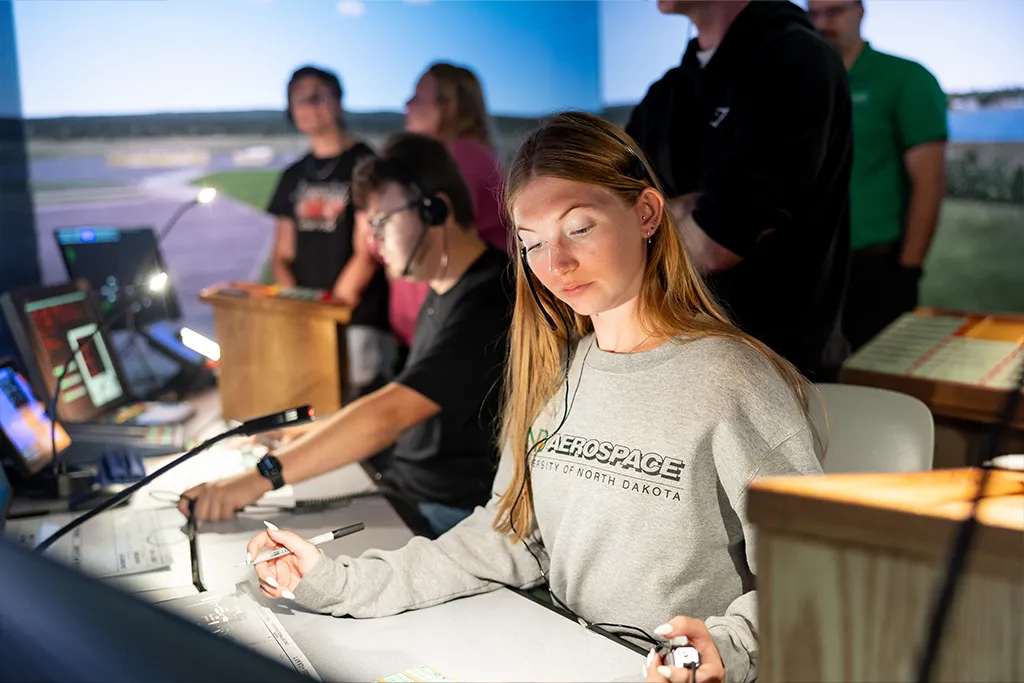
Controllers are certified per facility type. So, if you transfer to a different type of facility later in your career, you'll need to complete additional training and earn certification for that new environment.
Earning your certification is the culmination of years of education, testing, and training. It's the moment when you officially join the ranks of professional air traffic controllers, trusted with the safety of thousands of passengers every day.
Essential Skills for Air Traffic Controllers
Many jobs require attention to detail, but air traffic control, more so than others, demands it in real time and at high altitude—often quite literally. Controllers must keep hundreds of moving parts in balance while ensuring safety and precision under pressure.
Therefore, to succeed in this role, you'll need a blend of cognitive, technical, and interpersonal strengths, including:
- Clear communication
- Quick decision-making
- Simultaneous coordination
- Strong analytical ability
- Stress resilience
- Exceptional concentration
- Situational awareness
- Technological proficiency
Career Outlook and Growth Opportunities
While the number of new positions each year is limited, demand for skilled air traffic controllers remains steady. According to the U.S. Bureau of Labor Statistics, approximately 2,200 openings are projected annually over the next decade. Most of these are to replace retiring professionals or those leaving the field, rather than from new job creation.
Air traffic control is a high-responsibility profession, and that's reflected in compensation. The median annual wage is $144,580, with the top 10 percent earning more than $210,410. Salaries increase as you progress through training and vary by facility type, geographic location, and traffic complexity.
Beyond financial rewards, the role offers long-term stability and full federal employment benefits, including retirement packages, health coverage, and generous leave policies. Advancement is also possible: many controllers eventually move into supervisory roles, training positions, or FAA administrative careers.
Students graduating from the University of North Dakota often enter the FAA hiring process well-prepared, especially with access to advanced simulators and practical coursework that mirrors FAA Academy instruction.
Overcome Common Challenges as an Air Traffic Controller
Every career has hurdles, but in air traffic control, the stakes are higher, and the expectations sharper. Some of the most common challenges controllers face include:
- Managing stress: The pressure of coordinating flights safely can be intense. Success requires regular stress management techniques, proper rest, and institutional support from peers and supervisors.
- Rotating schedules: Controllers often work irregular hours, including nights and weekends. Building routines around shifts and prioritizing recovery time is crucial.
- Staying physically and mentally fit: FAA standards include periodic medical evaluations. Maintaining good health and mental clarity is part of the job.
- Constant performance review: Your work is evaluated throughout your career. The key is to view feedback as a tool for improvement, not criticism.
- Competitive entry: With limited new roles each year, the hiring process is selective. Candidates who train through FAA-approved programs and understand the process ahead of time stand a better chance of success.
Conclusion
Becoming an air traffic controller is demanding, but also a remarkably structured process. With the right education, determination, and preparation, you can navigate each stage successfully.
For those aiming to build a focused and competitive path into air traffic control, UND offers one of the most direct and effective starting points. Its FAA-approved curriculum pairs in-depth coursework with hands-on training using some of the most advanced simulation technology available. Taught by experienced faculty and aligned with real FAA systems, the program equips graduates to enter the hiring process with both technical skill and professional confidence.
As an air traffic controller, the safety of thousands rests on your voice. Make sure it's one backed by skill, training, and composure.
FAQs
Becoming an air traffic controller is challenging but achievable with the right preparation. The process involves competitive testing, rigorous training, and continuous performance evaluations, but FAA-approved education programs significantly improve your chances of success.
From starting your education to earning full FAA certification, the process typically takes 4-6 years. This includes completing a bachelor's degree (4 years), passing the FAA hiring process and Academy training (several months), and completing on-the-job training at your facility (2-4 years).
Many controllers find satisfaction in the constant mental engagement and problem-solving aspects of the job. Working in a team environment with other skilled professionals, having a direct positive impact on flight safety, and experiencing the unique perspective of managing airspace operations are all rewarding elements of the career.