Types of Air Traffic Controllers: Roles and Functions
From the moment a plane initiates pushback until touchdown, air traffic controllers manage the flight's journey.
Request Information
What seems like a straightforward trip from one airport to another actually involves a tightly coordinated system. With so many lives depending on safe passage, even a small misstep can carry serious consequences.
While pilots and cabin crew handle everything onboard, an entire network operates from the ground, with different types of air traffic controllers being of critical importance in guiding aircraft safely through the skies.
Key Takeaways
- Different types of air traffic controllers specialize in distinct phases of flight, including takeoff, taxiing, climb, cruising, and landing.
- Tower and ground controllers manage activity at the airport itself, while approach, departure, and en-route controllers oversee airspace beyond the runway.
- Each role demands targeted training and unique skill sets, offering multiple pathways for those pursuing a career in air traffic control.
What Do Air Traffic Controllers Do?
Air traffic controllers are professionals tasked with guiding aircraft through every phase of flight: on the ground, during takeoff, across en route airspace, and as they land. Their job is to ensure safe distances between planes, steady traffic flow, prevent collisions, manage airspace congestion, and respond to sudden changes like weather shifts or in-flight emergencies.
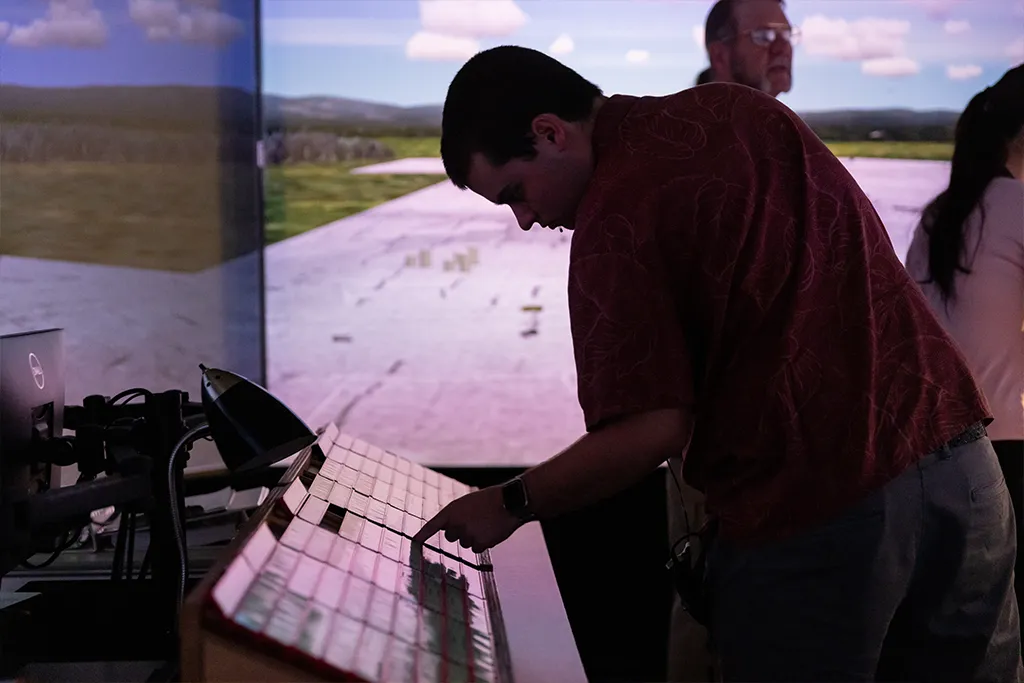
To do this, controllers maintain constant radio contact with pilots. They provide real-time instructions, relay crucial updates, and coordinate with other control centers as planes move through different sectors of airspace. Whether directing a commercial jet, a private aircraft, or a cargo flight, the controller's decisions must be immediate, clear, and accurate. The stakes are high while the margin for error is minimal.
Types of Air Traffic Controllers
The air traffic control system is organized by both geography and flight phase. Different types of air traffic controllers handle aircraft at various stages. Among the main types of controllers are:
Tower Controllers
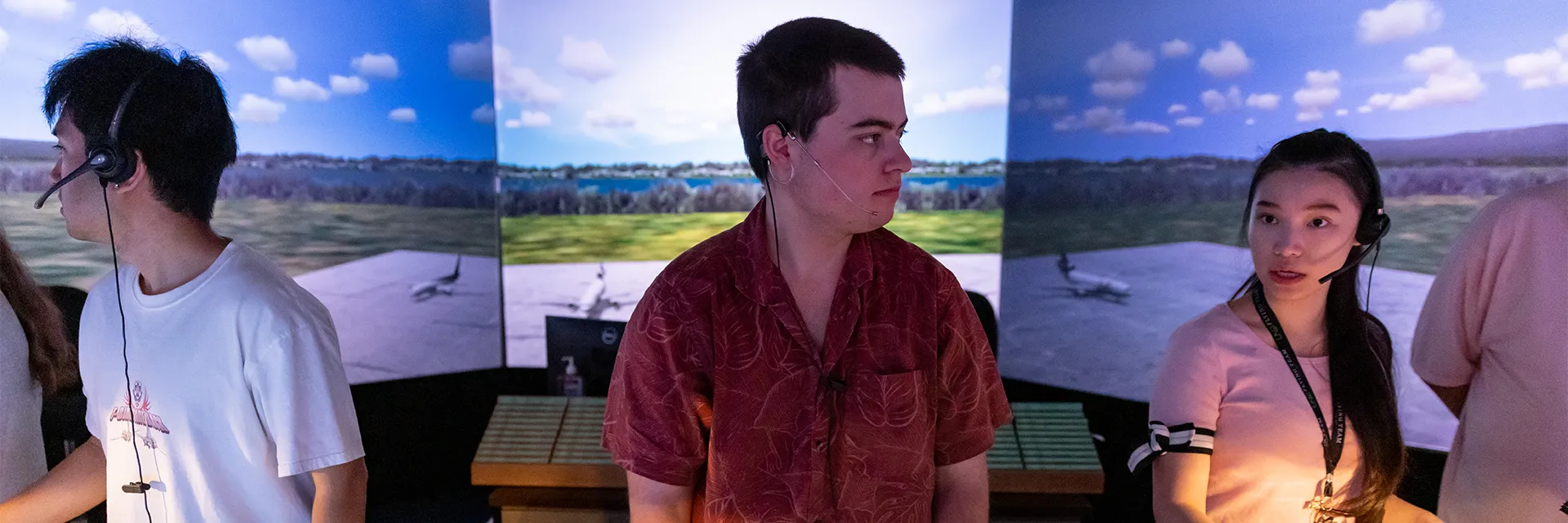
Tower controllers are the voices pilots hear during the most intense moments of any flight: takeoff and landing. Working from tall structures with windows that provide a 360-degree view of the airport, these controllers visually track and coordinate aircraft within the immediate airspace surrounding the airport, usually within a five-mile radius.
They authorize takeoffs, guide incoming planes to safe landings, and manage runway traffic to prevent accidents. Timing is critical. One aircraft may be moments from touching down while another is already rolling down the same runway. A tower controller must assess speed, distance, and sequence with complete accuracy. They also communicate with ground controllers to ensure that aircraft are positioned correctly for takeoff or cleared to cross runways when returning to the terminal.
This position requires strong spatial awareness, precise timing, and the ability to communicate with clarity under pressure. Although they see aircraft with their own eyes, tower controllers often supplement visual observation with radar displays and flight data systems to make the right decisions in real time.
Ground Controllers
Ground controllers take charge of aircraft before they leave the gate and after they exit the runway. Their domain includes taxiways, ramps, and all non-runway areas of the airport's surface. They manage aircraft movement between gates, hangars, and runways, coordinating with multiple parties, including tower controllers, maintenance crews, and service vehicles.
Because airports are quite complex environments filled with fuel trucks, catering vehicles, baggage carts, and other ground equipment, ground controllers must account for both scheduled aircraft movements and unexpected obstacles. They also help prevent collisions on the ground, which are more common than most travelers realize.
Ground control might not involve the same high-speed decision-making as tower operations, but it demands a different kind of complexity. Keeping dozens of moving parts, both human and mechanical, operating in sync on a crowded apron is no simple task. The decisions made here affect not just one aircraft but the efficiency of the entire airport schedule.
Approach and Departure Controllers
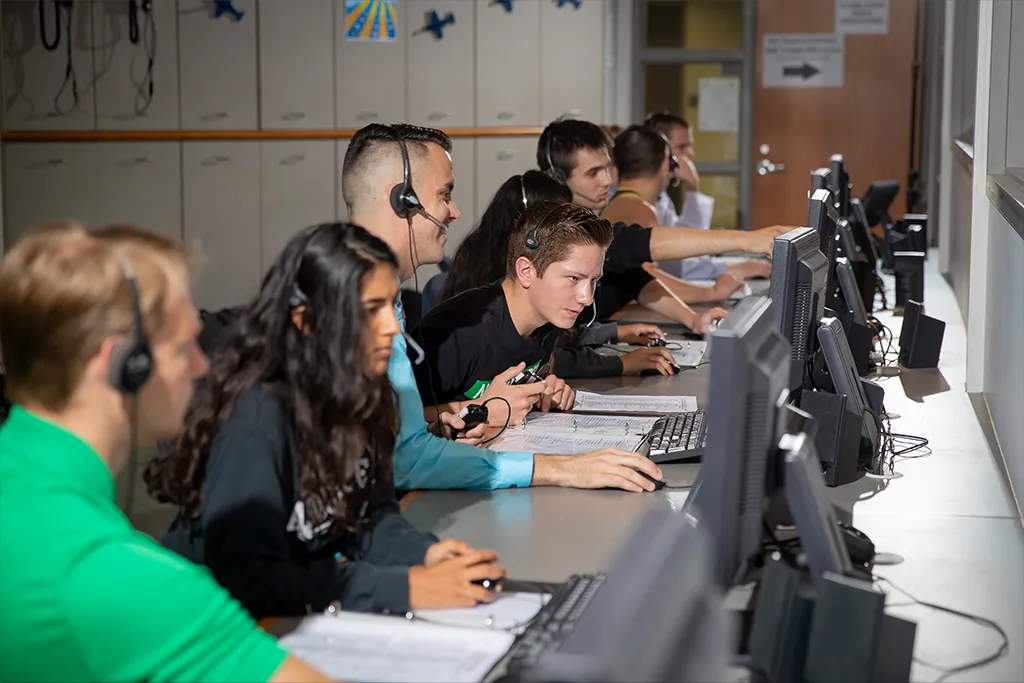
Once an aircraft climbs out of the airport's immediate area or begins its descent for arrival, responsibility shifts to approach and departure controllers. These professionals operate from Terminal Radar Approach Control (TRACON) facilities, where they use radar systems to monitor and guide aircraft within a radius of about 30 to 50 miles around an airport.
Departure controllers help outbound aircraft ascend safely into en-route airspace. They issue headings, altitudes, and speed adjustments to separate flights and prevent conflicts. This transition must happen quickly, especially at busy airports where planes depart in short succession.
Approach controllers do the reverse. They receive flights from en route centers and guide them through the initial descent. Their job is to organize incoming traffic into manageable streams, ensuring that spacing between aircraft remains safe and orderly. As a plane approaches the final stage of landing, approach controllers transfer communication to the tower.
Unlike tower and ground controllers, who often work with what they can physically see, approach and departure controllers depend almost entirely on radar data and flight progress strips. They rarely have visual contact with the aircraft they manage, which makes their work highly technical and reliant on precise coordination.
En-Route Controllers (Center Controllers)
En-route controllers, also known as center controllers, monitor aircraft during the cruise phase of flight. They operate from Air Route Traffic Control Centers (ARTCCs), which cover large swaths of national airspace—sometimes extending over multiple states. These controllers handle aircraft traveling at high altitudes and speeds, often 500 miles per hour or more.
Their main responsibility is maintaining safe separation between aircraft flying on similar routes or converging flight paths. They coordinate with other regional centers to hand off planes as they move from one zone to the next, ensuring uninterrupted communication and guidance for flights that span hundreds or thousands of miles.
En-route controllers work in a highly structured environment, using sector boundaries, altitude assignments, and speed management to maintain order in the skies. Unlike the more condensed activity near airports, en-route airspace involves longer time frames but broader spatial considerations. A mistake here could have consequences far beyond a single airport or flight.
Although passengers rarely think about what happens during the cruise phase, it represents the largest portion of most flights, and it's where the air traffic control system shows its scale. At any given moment, thousands of planes are moving across national airspace, all coordinated through these regional centers.
How to Become an Air Traffic Controller
If you're interested in pursuing any of these air traffic controller specializations, you must put in the work and pursue proper education and training.
Educational Requirements
While the minimum requirement to enter FAA training is a high school diploma combined with work experience or a bachelor's degree in any field, having specialized aviation education significantly improves your chances. Candidates with degrees in aviation, engineering, or related technical fields enter the hiring process with stronger credentials.
The most direct path is attending an FAA-approved Air Traffic-Collegiate Training Initiative (AT-CTI) program. UND's Air Traffic Management degree is one of these accredited programs. That means students can complete the FAA Academy Tower training curriculum right on campus, putting them on a faster track to begin localized training at an air traffic facility after graduation.
The strength of UND's program lies in its unmatched access to simulation technology and real-world practice. Colt Iseminger, UND's lab simulation manager and instructor, explains the program's approach: "Every aviation major has to take Introduction to Air Traffic Control. We give them the chance to have time on the radar simulator so they get an idea of what controllers actually do. They typically realize it's a lot different than they thought."
At UND, students start with fundamentals like math and maps, building a solid understanding of airspace management without relying on automation. From there, they progress into one of the most advanced training ecosystems in the country:
- A 32-position radar lab in Ryan Hall for en route simulation
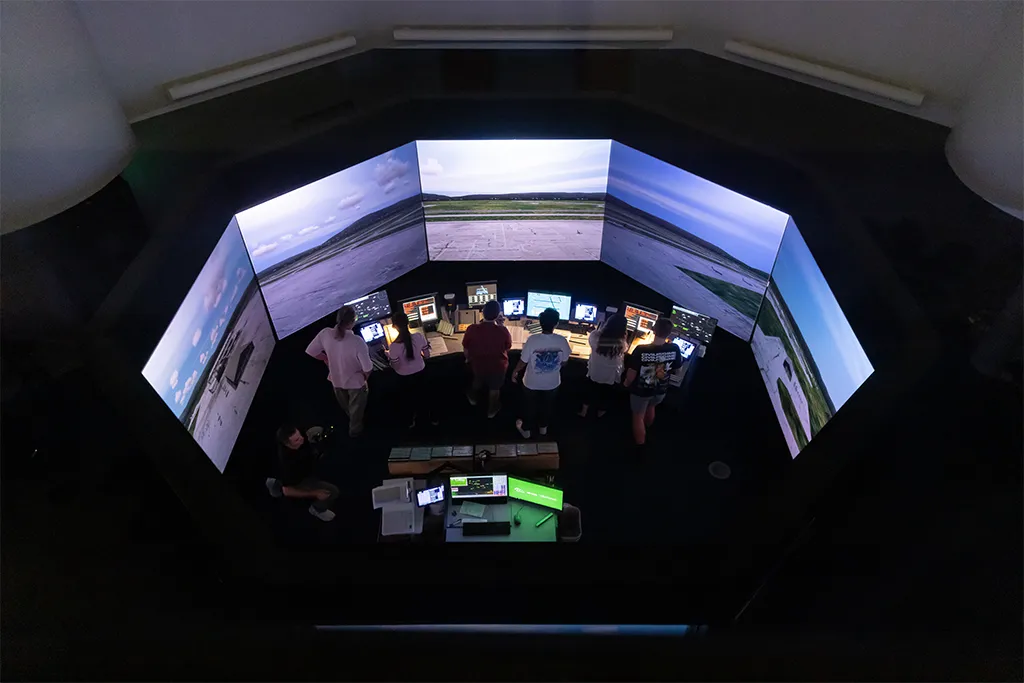
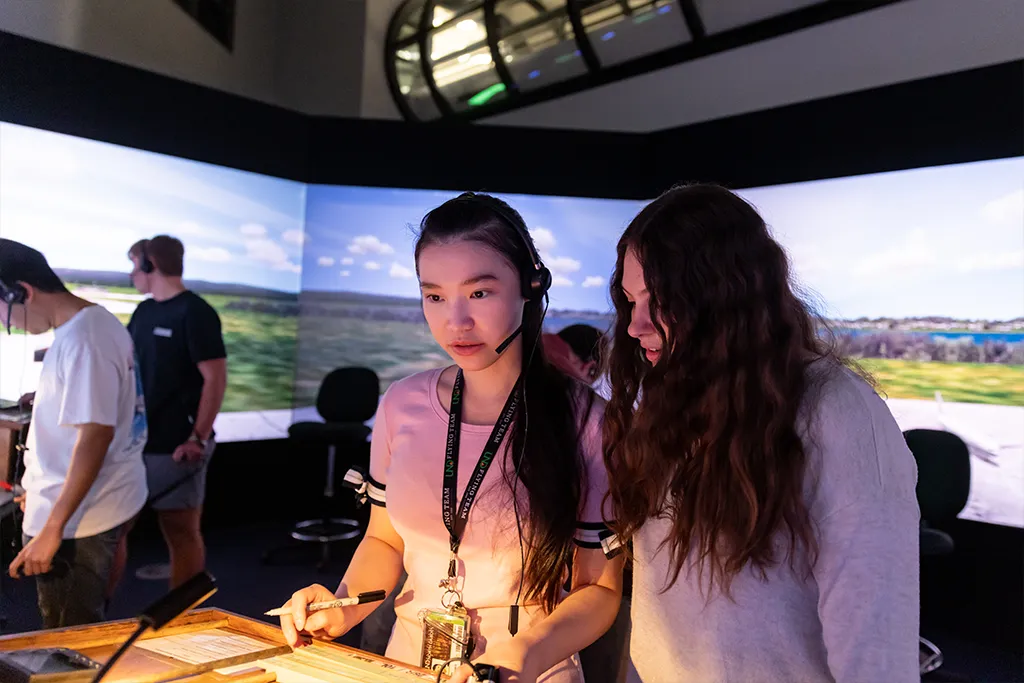
- A 225-degree control tower simulator offering panoramic training
- A 360-degree tower simulator in Clifford Hall that replicates real-time airport traffic conditions
- Integrated labs where students act as both virtual pilots and controllers during live scenarios
By the time they reach upper-level coursework, students are immersed in realistic tower operations with airport models, flight plan software, and FDIO computers, as well as tabletop labs to simulate traffic patterns manually.
UND's job-shadowing requirement adds yet another layer of preparation. Each student spends time in the Grand Forks tower, observing how real-world professionals manage operations. These insights are paired with hands-on lab work where students simulate traffic, track aircraft, and communicate across radio frequencies—often running entire scenarios with their classmates playing different roles in real time.
This depth of exposure pays off. According to Iseminger, UND graduates often outperform peers at the FAA Academy in Oklahoma City, where all new controllers go for final training: "Students leave here with a very good base knowledge of air traffic control operations, and they can build on that. We've had a very good success rate at the Academy."
Essential Skills Required
Successful air traffic controllers share several core competencies that enable them to excel in any specialization. Some such skills include:
- Delivering precise, unambiguous instructions in high-pressure situations
- Managing multiple aircraft and tasks simultaneously without losing focus
- Visualizing aircraft positions and movements based on radar and data alone
- Solving problems quickly when unexpected situations arise
- Coordinating with other controllers to maintain flight safety
- Maintaining continuous awareness of traffic, weather, and operational changes
- Remaining calm, focused, and resilient under sustained mental pressure
Start Your Journey in Air Traffic Control
If you're looking for a career that offers purpose and options, air traffic control is one of the most rewarding paths you can take. It's a profession where precision matters and every decision has real impact. The variety of specializations gives you the flexibility to find the role that suits you best.
With more than 50 years of experience in aviation education, the University of North Dakota has built a global reputation for excellence in flight and air traffic training. The Air Traffic Management program, as part of the FAA's Enhanced Air Traffic–Collegiate Training Initiative, connects students to the tools, technology, and preparation the industry expects. If you're serious about entering the field, not just qualified but ahead of the curve, UND is the way to go.
FAQs
Air traffic controllers earn a median salary of approximately $144,000 annually, with compensation varying based on facility size, location, and experience level.
Controllers work rotating shifts that cover 24/7 operations, including nights, weekends, and holidays. Most facilities use rotating schedules that change every few weeks, and shifts typically last 8-10 hours with mandatory breaks during busy periods.