What Does an Air Traffic Controller Do? Key Insights
Each day, the FAA’s Air Traffic Organization manages over 44,000 flights. Yet, it might surprise some people to learn that flying is still far safer than driving.
Request Information
The death rate for passenger vehicles is around 1,200 times higher than that of scheduled airlines. That record comes as a result of the coordination and vigilance of air traffic controllers.
All this, naturally, raises an important question: what does an air traffic controller do to keep the skies so safe?
Key Takeaways
- Air traffic controllers maintain aviation safety by monitoring radar systems, communicating weather hazards, coordinating with pilots and ground crews, and handling in-flight emergencies.
- Controllers work in three main specializations: tower (airport operations), approach/departure (terminal airspace), and en route (high-altitude flights between airports).
- Essential skills include precise communication, situational awareness, quick decision-making under pressure, and effective teamwork.
What Does an Air Traffic Controller Do?
Air traffic controllers oversee the movement of aircraft through shared airspace by guiding flights from departure to arrival. They are responsible for maintaining safety and keeping the flow of air traffic steady across one of the most complex transportation systems in the world.
The United States is facing a nationwide shortage of licensed air traffic controllers, a gap that poses increasing challenges for the aviation industry. Eric Link, Provost of the University of North Dakota (UND), believes the school is well-positioned to help fill that gap.
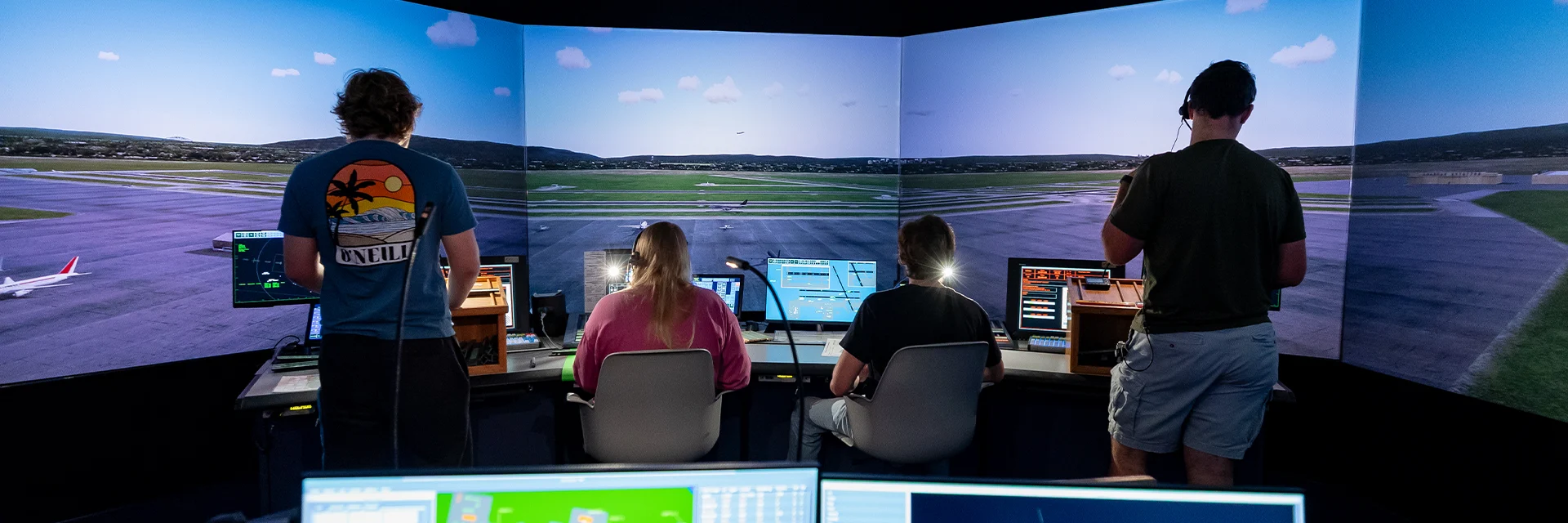
For more than 50 years, UND's John D. Odegard School of Aerospace Sciences has been a global leader in aviation education. Students learn in one of the most advanced simulation environments in the country, featuring a 360° Adacel MaxSim® Tower/Radar System and a state-of-the-art UFA ATC Radar Lab. Every stage of training reflects real-world conditions and prepares students for the responsibility of managing aircraft within the National Airspace System.
Through its Air Traffic Management program and participation in the FAA's Enhanced Air Traffic–Collegiate Training Initiative, the University of North Dakota is preparing students to move more quickly from classroom learning to operational control facilities. The enhanced pathway is intentionally rigorous, designed for students willing to meet demanding performance benchmarks and invest additional time in simulation labs.
As Craig Carlson, associate professor of aviation and assistant chair of UND's Air Traffic Management program, emphasized, "This enhanced program is not for every student. It's for highly motivated individuals who are willing to put in significant extra time in the labs."
By aligning upper-level coursework directly with FAA Academy training standards, UND enables qualified graduates to bypass the FAA Academy and proceed directly to on-the-job training. This accelerated route helps strengthen the nation's air traffic system while ensuring that safety, precision, and reliability continue to meet growing demand.
Key Responsibilities
Air traffic controllers carry out a range of tasks that require constant focus and technical precision. Each decision they make contributes to the safety and efficiency of the National Airspace System.
The following core responsibilities define the work of air traffic controllers and reveal why specialized training is essential to perform them well.
Separating Aircraft
The most fundamental responsibility of any air traffic controller is maintaining safe distances between aircraft. This process, called separation, prevents mid-air collisions and near misses that could result in catastrophic accidents.
Radar systems allow controllers to monitor each aircraft's position, altitude, and speed, typically maintaining three to five miles of horizontal spacing or at least 1,000 feet vertically, depending on altitude and airspace. When visibility permits, pilots can apply visual separation under a controller's supervision, maintaining their own safe distance from nearby traffic.
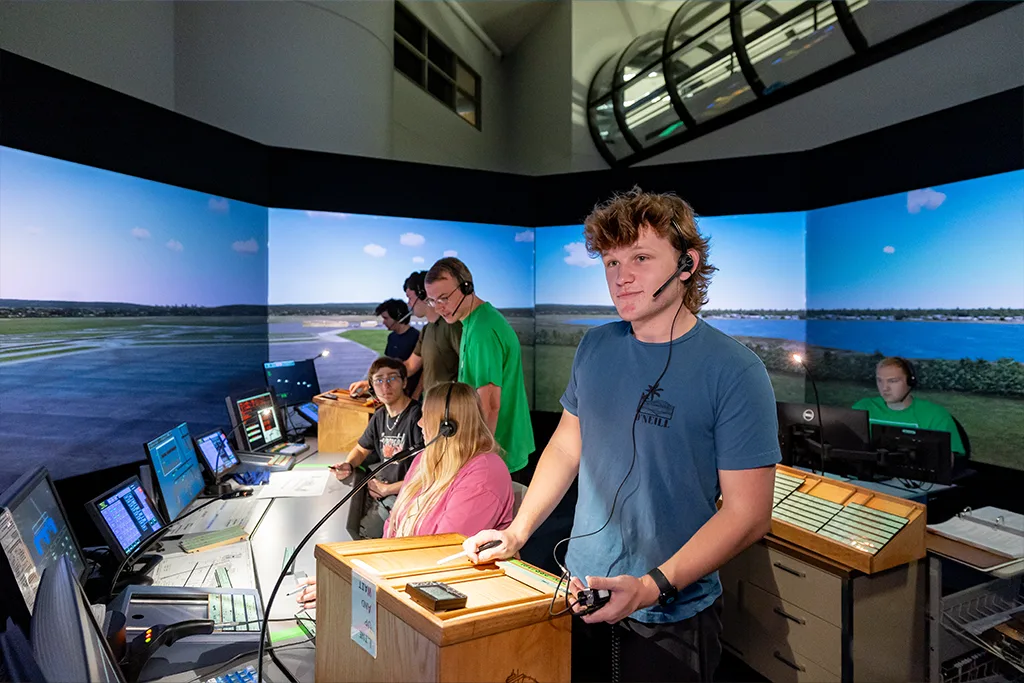
On the ground, controllers guide aircraft during taxiing, takeoff, and landing, ensuring that runways and taxiways remain clear. During high-traffic periods, this becomes a complex choreography of movement requiring constant attention and precise timing. Even a single lapse in awareness can create dangerous conditions, which is why controllers continuously anticipate aircraft positions several minutes ahead.
Issuing Flight Clearances
Flight clearances are formal authorizations that allow aircraft to proceed with specific actions. Controllers issue clearances for takeoffs, landings, flight paths, altitude changes, and route modifications based on traffic conditions and airspace restrictions.
A typical clearance includes instructions on runway assignment, climb or descent altitude, headings, and routing details. Pilots repeat these instructions back to confirm accuracy, and controllers verify the readback before authorizing the next step. This process establishes a structured pattern of movement across airspace, reducing confusion and maintaining predictability.
Because conditions can change quickly, clear communication is essential. Controllers may modify routes or altitudes in response to congestion, weather systems, or temporary airspace restrictions. Each clearance reflects a deliberate judgment call—one that keeps the aircraft positioned safely within a constantly shifting environment.
Managing Air Traffic Flow
Controllers also manage the overall flow of air traffic in order to prevent bottlenecks and minimize delays. This responsibility requires big-picture thinking and coordination across multiple facilities.
Controllers adjust spacing between aircraft to keep traffic steady, hold planes in designated areas when airports reach capacity, and arrange alternate routes when airways become crowded. Coordination among towers, terminal radar approach controls (TRACONs), and en route centers is constant.
Traffic sequencing is key to minimizing wait times while maximizing runway use. Aircraft approaching an airport are timed to land at consistent intervals, a process that begins miles away and demands careful synchronization.
During peak hours, airports may operate at or near full capacity for extended periods, requiring controllers to sustain intense focus and adaptability throughout the shift.
Communicating Weather and Hazard Updates
Weather is one of aviation's greatest variables, and controllers play a vital role in keeping pilots informed about conditions that could affect safety. They relay weather information continuously, allowing pilots to make informed decisions about their flights.

When hazards arise, controllers act quickly to reroute traffic, adjust altitudes, or delay takeoffs until conditions improve. They also relay pilot reports of unexpected turbulence or weather activity to other nearby flights, creating a shared network of situational awareness across the airspace.
This constant flow of information helps pilots make informed decisions and avoid dangerous conditions. While the pilot has final authority over the aircraft, the data and perspective provided by controllers often determine the safest course of action at that moment.
Providing Emergency Assistance
When in-flight emergencies occur, air traffic controllers are among the most members of the emergency response team. They coordinate with adjacent control centers, alert emergency response teams at the destination airport, and clear airspace to give the flight a direct path.
Controllers also provide guidance and reassurance to pilots under stress by suggesting alternate airports, confirming runway lengths, or relaying information from emergency crews on standby. Their responsibility doesn't end until the aircraft has landed safely and ground responders have taken over.
Types of Air Traffic Controllers
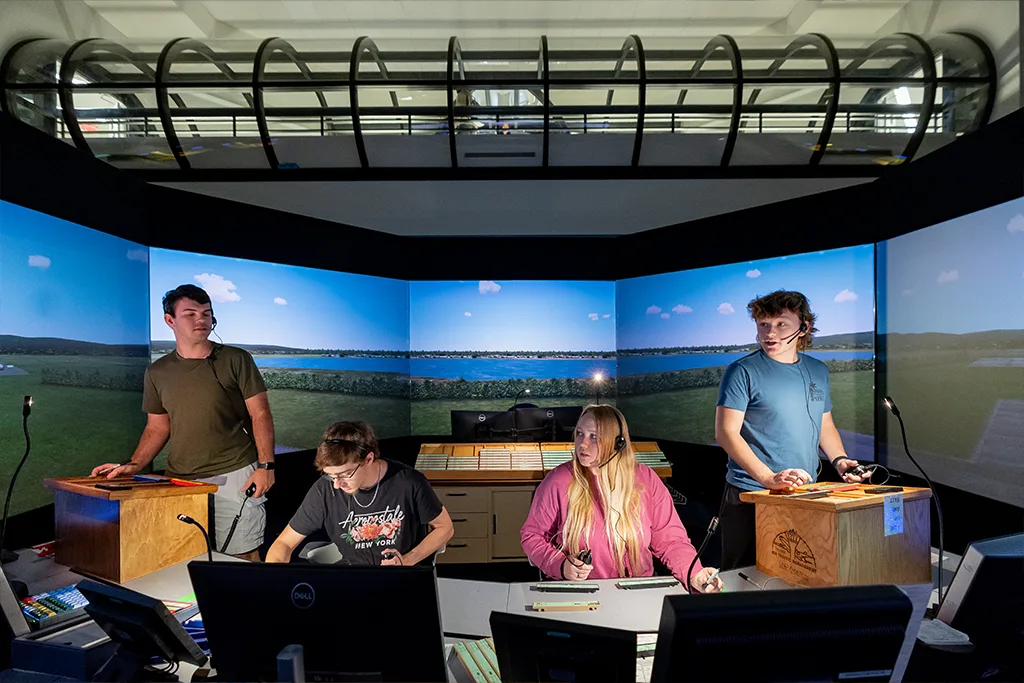
Air traffic controllers can specialize in different operational areas and work in different environments that reflect the various stages of a flight. Each type of controller focuses on a specific segment of airspace and plays a distinct role in maintaining the safety and efficiency of air travel.
Tower Controllers
Tower controllers are situated in control towers located on or near airports and have direct visual oversight of runways, taxiways, and nearby airspace. They authorize when planes take off and land, guide movements on the ground, and manage aircraft operating close to the airport.
Because tower controllers work within view of the airfield, they are generally the most recognizable members of the profession—visibly coordinating aircraft through radio communication as they watch from the tower windows.
Approach and Departure Controllers (TRACON)
Approach and departure controllers, often referred to as TRACON controllers (Terminal Radar Approach Control), oversee aircraft within the busy terminal airspace surrounding major airports, typically extending 30 to 50 miles from the airport and up to around 10,000 feet.
These professionals handle the critical transitions between cruising and landing (approach) and between takeoff and climb (departure). Managing rapid altitude and speed changes in crowded airspace requires quick judgment and precise coordination.
En Route Controllers
En route controllers, based in area control centers, monitor high-altitude flights traveling between airports across vast regions. They manage aircraft during the cruise phase, maintaining separation and sequencing as planes move from one sector to another.
While these types of air traffic controllers typically manage a smaller number of aircraft than tower controllers, they do so over much larger areas and longer stretches of flight, which means that handoffs between control centers are in constant play.
Required Skills for Air Traffic Controllers
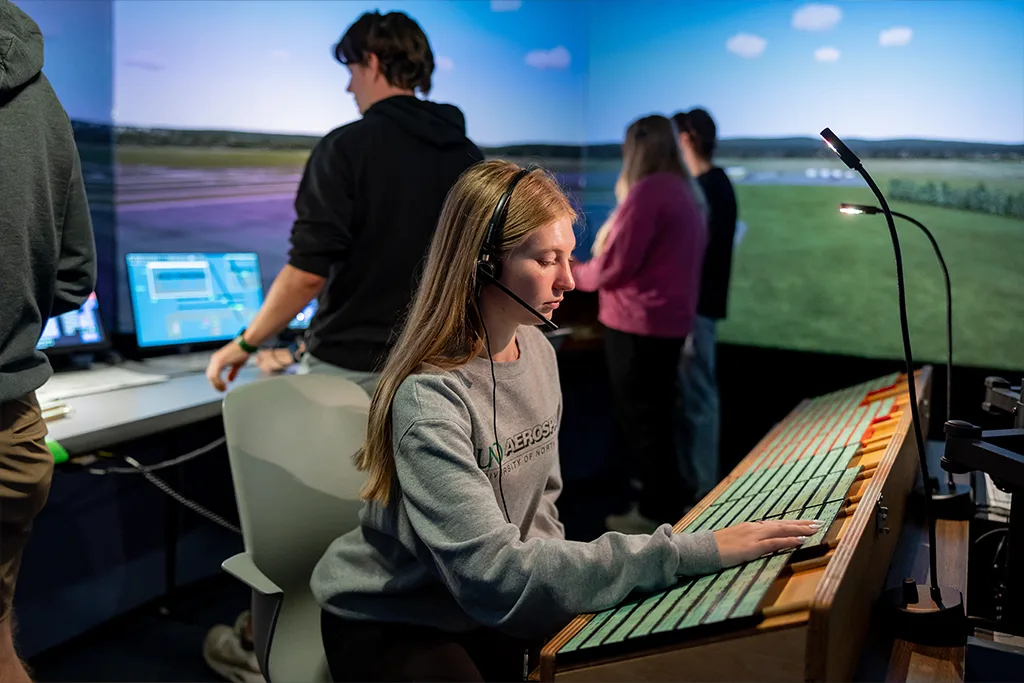
Air traffic controllers carry enormous responsibility. Each decision they make affects the safety of hundreds of people. Therefore, controllers must master the following skills:
- Sharp concentration and attention to detail
- Clear communication
- Quick and sound decision-making
- Strong situational and spatial awareness
- Problem-solving under pressure
- Calmness and emotional control
- Teamwork and coordination
- Adaptability to changing conditions
- Technical proficiency with radar and communication systems
- Multitasking and time management
Guardians of the Skies in Modern Aviation
Each day, thousands of lives depend on the unseen precision of air traffic controllers. It's a career where split-second judgment and technical expertise protect the flow of global aviation. That level of responsibility demands training that is every bit as rigorous as the job itself.
At the University of North Dakota, the Bachelor of Science in Aeronautics with a major in Air Traffic Management provides that foundation. By pairing thorough aviation education with specialized training that reflects the FAA Academy curriculum, UND equips students to step directly into control facilities.
Every controlled climb and smooth landing starts with someone trained to think three steps ahead. Join us at UND and train to become that calm, capable presence guiding aircraft safely home.
FAQs
Yes. It's a demanding profession that calls for sustained focus, quick decision-making, and composure under pressure. Controllers must stay sharp while managing multiple aircraft at once, often in fast-changing conditions.
According to the U.S. Bureau of Labor Statistics, air traffic controllers earn an average annual salary of $144,580 though pay varies by experience, location, and the complexity of the facility.
Many retired controllers continue contributing to aviation as safety consultants, ATC instructors, simulation specialists, or flight operations managers. Others move into aviation education, training the next generation of controllers at universities and flight schools.